Site security planning checklist for safer facilities and operations
a[data-rs-seo-link]{text-decoration:underline!important;color:#1a56db!important;cursor:pointer!important;}a[data-rs-seo-link]{text-decoration:underline!important;color:#1a56db!important;cursor:pointer!important;}
Site security planning turns facility risk into practical decisions: who may enter, how assets are protected, how incidents are reported, and how operations continue after a disruption. A useful plan is not a binder created once for an audit. It is an operating model shaped by current threats, local conditions, facility layout, workforce routines, regulatory duties, and the limits of budget and staffing. For owners, managers, and safety teams, the aim is to reduce preventable exposure while keeping the site workable for employees, visitors, vendors, and emergency responders. This checklist covers the core elements of a risk-informed site security planning process for commercial facilities, public-facing locations, campuses, warehouses, and mixed-use sites.
What site security planning should accomplish
A site security plan should answer five practical questions: what must be protected, what could reasonably go wrong, which controls reduce the most important risks, who is responsible for each action, and how the plan will be tested. CISA’s Security Planning Workbook describes security planning as a way to compile key information that can support a comprehensive security plan. It also emphasizes that the process should be flexible and scalable for different organizations and facilities. (cisa.gov)

The plan should address people, property, information, critical operations, and reputation. In a small office, that may mean visitor procedures, after-hours access, emergency contacts, and camera coverage. In a larger site, it may also include vehicle screening, guard post orders, command center procedures, key control, loading dock rules, contractor badges, critical utility protection, and coordination with public safety agencies.
Effective planning separates three related types of work. Prevention reduces the likelihood of an event, such as unauthorized access or internal theft. Protection limits consequences when prevention fails, such as locked critical rooms, safe refuge areas, and redundant communications. Response and recovery define what happens during and after an incident. Treating all three as one program helps prevent a common imbalance: heavy spending on hardware while procedures, training, or recovery steps remain weak.
Start with a documented risk assessment
Risk assessment should come before equipment selection. FEMA’s preparedness guidance states that threat and hazard assessment results should be used as a key input to planning and that plans should be risk-informed. (preptoolkit.fema.gov) For a facility security team, that means the plan should not begin with a preferred product list. It should begin with site-specific evidence: location, business hours, crime patterns, public access points, critical assets, previous incidents, workplace concerns, nearby hazards, and operational dependencies.
A practical assessment does not have to be complex, but it should be written. Start by listing credible threats and hazards, then rate each one by likelihood, consequence, current controls, and remaining exposure. Include security and safety scenarios where they overlap: workplace violence, trespass, theft, vandalism, protest activity, vehicle intrusion, severe weather, power loss, fire evacuation, cyber-physical disruption, and medical emergencies.
| Risk input | Questions to ask | Planning output |
|---|---|---|
| Site profile | Who uses the site, when, and for what purpose? | Access zones, staffing needs, and visitor procedures |
| Asset inventory | Which people, rooms, equipment, systems, and records are most critical? | Prioritized protection measures |
| Threat history | What incidents have occurred on-site or nearby? | Scenario planning and control updates |
| Operational dependencies | Which utilities, vendors, networks, and transport routes are essential? | Continuity and recovery actions |
| Existing controls | Which measures work, fail, or create friction? | Improvement roadmap and budget priorities |
Workplace violence deserves separate attention because it often involves behavioral, operational, and environmental factors rather than a single technical fix. OSHA’s workplace violence overview notes that time of day and work location, including late-night work and areas with higher crime risk, can be relevant risk factors. It also states that there are currently no specific OSHA standards for workplace violence. (osha.gov) That does not remove the need to manage foreseeable hazards. It means the plan should be adapted to the workplace, industry, and jurisdiction rather than copied from a generic template.
Build a planning team with clear decision rights
Site security planning loses momentum when responsibility is scattered. A strong plan names who owns the process, who approves priorities, who maintains records, and who can make decisions during an incident. The planning team usually includes facility management, security, safety, human resources, IT, legal or compliance, operations, reception or front desk staff, and representatives from business units that use the site heavily.
NIST SP 800-53 is written for information systems and organizations, but its control families illustrate a useful governance lesson for facility teams: security planning connects with access control, awareness and training, contingency planning, incident response, physical and environmental protection, personnel security, and risk assessment. (csrc.nist.gov) A physical site plan should therefore avoid silos. Door access rules affect HR offboarding. Camera coverage affects privacy and investigations. Network outages affect badge systems. Emergency communications affect operations and public safety coordination.
Decision rights should be explicit. Who can lock down a site? Who can suspend visitor access? Who contacts law enforcement? Who communicates with employees? Who approves temporary access for a vendor during an outage? These answers should be written before an incident, not debated during one.
Layer physical, procedural, and technology controls
Layered security means no single measure carries the entire burden. NFPA’s publications list includes NFPA 730, Guide for Premises Security, and NFPA 731, Standard for the Installation of Premises Security Systems, reflecting the industry distinction between overall premises security guidance and installed security system practices. (link.nfpa.org) In practical terms, a site plan should combine design, procedures, people, and technology.
Perimeter and access control
Define the site’s security zones before selecting hardware. Public areas, reception, employee-only areas, restricted operations, critical equipment rooms, records storage, and command or server spaces should not have the same access rules. The plan should specify doors, gates, keys, badges, PINs, locks, turnstiles, vehicle controls, and override procedures.
Access control should also include lifecycle management. New hires, role changes, contractors, temporary staff, terminations, lost badges, and emergency access all need clear procedures. A common weakness is installing badge readers while leaving approval, review, and revocation informal. The plan should require periodic access reviews and immediate removal of access when employment or contractor status changes.
Visitor, vendor, and contractor management
Visitor control is often the most visible part of security planning. The plan should state who may invite visitors, what identification is required, whether escorts are needed, which areas are off-limits, how deliveries are handled, and what happens when a visitor refuses procedures. For vendors and contractors, include proof of authorization, approved work areas, time windows, tool or equipment controls, and emergency instructions.
Surveillance, alarms, and monitoring
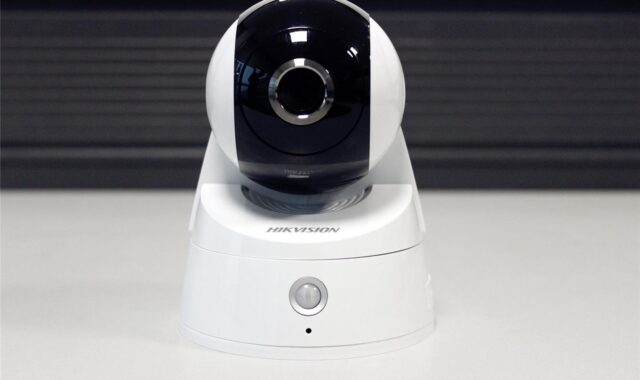
Cameras and alarms are useful only when they support defined decisions. The plan should document what must be observed, who monitors alerts, how long recordings are retained, who can access footage, and how alarms are escalated. Camera coverage should focus on entrances, exits, transaction points, loading areas, critical corridors, parking interfaces, and high-value asset areas, while respecting privacy rules and employee relations concerns.
Cyber-physical dependencies
Modern facilities rely on connected systems: access control servers, cameras, intercoms, building automation, elevators, HVAC, lighting, emergency notification systems, and mobile credential platforms. A physical security plan should identify which systems depend on network availability, vendor cloud services, power, and administrative credentials. If the badge system fails, the plan should define manual access procedures. If camera monitoring is unavailable, it should define patrol or staffing adjustments.
Prepare for incidents, continuity, and recovery
Incident response planning should cover likely scenarios and high-impact scenarios. CISA’s active shooter preparedness resources include materials for businesses, government offices, schools, and communities, and the agency points organizations toward emergency action planning and training for active assailant situations. (cisa.gov) For most sites, the response section should cover evacuation, shelter-in-place, lockdown, medical response, suspicious packages, unauthorized persons, threats, severe weather, fire alarms, power outages, and communications disruption.
Response procedures should be short enough to use under stress. Each scenario should identify the trigger, immediate actions, notification path, roles, assembly or refuge locations, accounting method, communication channel, and recovery steps. The plan should also include contact lists for police, fire, emergency medical services, property management, utilities, security vendors, insurance contacts, and internal leadership.
Continuity matters because some incidents do not end when the immediate threat stops. NIST’s contingency planning discussion recognizes related plans such as business continuity, disaster recovery, crisis communications, incident response, and occupant emergency plans. (csrc.nist.gov) A site security plan should therefore connect with broader continuity planning, including alternate work areas, backup communications, emergency purchasing, records access, temporary guarding, generator fuel, and re-entry decisions.
Turn the plan into a living operating system
A site security plan has value only if people can use it. Training should be role-based. Reception staff need visitor and threat reporting procedures. Supervisors need escalation rules. Security officers need post orders and incident documentation standards. Employees need clear instructions for reporting concerns, responding to alarms, and using emergency communications. Executives need decision frameworks for closures, public statements, and resource approval.
Exercises should test assumptions, not simply confirm that a plan exists. A tabletop exercise can walk leaders through a threat, power loss, or access control failure. A functional exercise can test notification speed, camera retrieval, or visitor evacuation. A drill can test evacuation routes or shelter areas. After each exercise, document what worked, what failed, who owns the correction, and when it will be verified.
Review cycles should be scheduled and event-driven. At minimum, review the plan annually. Also review it after major renovations, staffing changes, new equipment, incidents, changes in operating hours, nearby crime trends, changes in tenant mix, or new regulatory obligations. Keep version history so teams know which procedures are current.
Common gaps that weaken site security plans
Many plans fail for predictable reasons. The first is treating security as a technology purchase rather than a risk management process. The second is writing procedures that front-line staff have never practiced. The third is failing to assign ownership for maintenance tasks such as badge audits, camera checks, lighting inspections, contact list updates, and alarm response testing.
- Unclear scope: The plan does not define which buildings, parking areas, tenants, shifts, or events it covers.
- Outdated maps: Floor plans, evacuation routes, utility shutoffs, and camera locations are not current.
- Weak access reviews: Former employees, inactive contractors, or transferred workers retain access.
- No manual fallback: Procedures depend on systems that may fail during power, network, or vendor outages.
- Untrained decision makers: Leaders are named in the plan but have not practiced incident decisions.
- Poor documentation: Incident reports, maintenance records, and corrective actions are inconsistent.
The fix is not always more equipment. Often, the highest-value improvements are basic: a current contact list, a tested notification process, better visitor procedures, documented access reviews, lighting repairs, clearer signage, and a short incident checklist that employees can actually follow.
Frequently asked questions
How often should a site security plan be reviewed?
Review it at least once a year and whenever the site changes materially. Renovations, new tenants, changed business hours, workforce reductions, new access systems, repeated incidents, or updated legal requirements should trigger an interim review.
Who should own site security planning?
Ownership depends on the organization, but the accountable owner should have authority to coordinate facilities, security, safety, HR, IT, operations, and leadership. In smaller organizations, this may be a facilities or operations manager. In larger organizations, it may be a security director or risk leader.
Is a site security plan the same as an emergency action plan?
No. An emergency action plan focuses on what people do during emergencies such as evacuation, shelter, or lockdown. A site security plan is broader. It includes risk assessment, access control, visitor management, physical safeguards, monitoring, incident response, recovery, training, maintenance, and review.
Should the plan include cybersecurity issues?
Yes, when cyber systems affect physical operations. Access control, cameras, alarms, building automation, communications, and identity systems often depend on networks, power, vendors, and administrator credentials. The plan should define manual workarounds and escalation steps if those systems are unavailable.
What is the first step for a facility with no formal plan?
Start with a written risk assessment and a simple asset list. Identify the most important people, spaces, operations, and systems; list credible threats and hazards; document current controls; and assign owners for the most urgent gaps. A modest, accurate plan is more useful than a large document that no one maintains.