Access control systems in 2026: what businesses should evaluate before upgrading

a[data-rs-seo-link]{text-decoration:underline!important;color:#1a56db!important;cursor:pointer!important;}a[data-rs-seo-link]{text-decoration:underline!important;color:#1a56db!important;cursor:pointer!important;}
Access control is now an identity and risk decision
Access control systems are no longer just card readers and electric locks on doors. In 2026, an upgrade decision is increasingly tied to identity assurance, life safety, cybersecurity, visitor workflows, auditability, and how well the system works with video surveillance and daily operations.
A modern system should answer four practical questions: who is requesting entry, whether that person is currently authorized, what happened at the opening, and how quickly the organization can respond when something looks wrong. For businesses planning a refresh, the strongest approach is not to chase every new credential type. It is to match each door, user group, risk level, and compliance obligation to a system design that can be managed reliably over time.

What an access control system includes
A physical access control system combines hardware, software, credentials, policies, and audit records to manage entry into protected spaces. The visible parts are usually readers, keypads, mobile credential readers, locks, door contacts, request-to-exit devices, turnstiles, and visitor entry points. Behind those devices are controllers, power supplies, network connections, identity databases, schedules, permissions, alarm rules, and reporting tools.
The basic workflow is straightforward: a person presents a credential, the system checks that credential against current permissions, the door hardware releases if access is allowed, and the event is logged. The design becomes more complex when an organization has multiple sites, shared tenants, regulated areas, contractors, elevators, parking gates, server rooms, laboratories, pharmacies, schools, or healthcare spaces.
Security teams should separate three decisions that are often blended together during procurement:
- Authentication: how the system verifies that the credential belongs to the person using it.
- Authorization: what that person is allowed to access at a specific time and location.
- Accountability: whether the organization can review events, investigate exceptions, and remove access quickly.
This distinction matters because a more advanced reader does not automatically create a stronger security program. Weak onboarding, shared badges, poor offboarding, unlocked side doors, and unreviewed access groups can defeat expensive hardware.
Key changes shaping access control in 2026
Several industry shifts are changing how access control projects are scoped. The Security Industry Association’s 2026 megatrend reporting highlights artificial intelligence disruption and faster security technology refresh cycles as major themes across the physical security market. For access control, the near-term impact is practical: systems are expected to connect with more data sources, support more credential types, and be managed with the same governance discipline as other networked enterprise platforms.
Cloud management is becoming a serious option
Cloud-managed access control can simplify multi-site administration, remote credential updates, reporting, software maintenance, and integration with modern identity tools. It may be especially useful for organizations with distributed offices, retail locations, apartment communities, or mixed-use properties where local server maintenance is difficult to staff and standardize.
Cloud is not automatically the right answer for every door. High-security environments may still require local control, strict network segmentation, defined offline behavior, and detailed resilience planning. Buyers should ask how the system behaves during an internet outage, who controls encryption keys, where logs are stored, how administrators authenticate, and how quickly access can be revoked if a credential or account is compromised.
Mobile credentials are expanding, but policy still matters
Mobile credentials can reduce the cost and inconvenience of issuing plastic cards, especially for employees who already use smartphones for workplace tools. They can also support faster remote provisioning and deprovisioning. However, mobile credentials introduce operational questions: what happens when a phone battery dies, how guest access is handled, whether personal devices are acceptable, and whether a fallback credential is required for emergency or high-traffic use.
The best mobile credential deployments are policy projects as much as technology projects. They define who can use mobile access, which doors still require stronger authentication, how lost devices are reported, and how human resources or tenant systems trigger access changes.
Biometrics remain useful but sensitive
Biometric readers can improve assurance in locations where lending or sharing credentials is a serious concern. Common use cases include high-security rooms, data centers, critical infrastructure areas, and sites where hands-free or high-throughput movement is important. Yet biometric access control also raises privacy, consent, retention, and legal questions. Organizations should not treat biometrics as a convenience feature without a documented policy for collection, storage, retention, deletion, and alternatives for people who cannot or do not wish to use biometric methods.
Reader-to-controller communication is getting more attention
Older access control designs often focused on the credential and the door lock while paying less attention to the wiring and protocol between the reader and controller. Modern specifications increasingly emphasize supervised, secure reader communication. OSDP-style architectures, for example, are commonly discussed because they can support bidirectional communication and stronger implementation options than simple legacy reader interfaces when properly configured.
Standards, codes, and safety constraints cannot be an afterthought
Access control must not compromise safe egress. The 2024 International Building Code addresses doors with access control systems and requires the egress side to comply with applicable locking-system provisions or remain readily openable without a key, special knowledge, or special effort. That is a life-safety requirement, not merely a security preference.
For U.S. projects, access control design often intersects with the adopted building code, fire code, local authority having jurisdiction, Americans with Disabilities Act considerations, and product standards. UL 294 is widely referenced for access control system units and testing. NIST publications, including guidance on Personal Identity Verification credentials for physical access control systems, are especially relevant for federal and high-assurance environments, even when private-sector buyers use them only as a reference point.
The practical lesson is clear: door hardware decisions should be made with qualified security, door hardware, fire protection, and code professionals before installation. A reader on the secure side of a door is usually straightforward. Electric locking hardware on the egress side, delayed egress, controlled egress, elevator access, stairwell re-entry, and fire alarm interface requirements require more careful review.
| Design area | What to verify before approval |
|---|---|
| Door hardware | Lock type, free egress, emergency release behavior, power loss behavior, and compatibility with the door assembly. |
| Life safety | Applicable building and fire code requirements, signage, emergency lighting, fire alarm interface, and authority review. |
| Credentials | Card, mobile, PIN, biometric, or multi-factor method based on risk and user practicality. |
| Cybersecurity | Administrator authentication, encryption, patching, network segmentation, logging, and vendor access controls. |
| Operations | Onboarding, offboarding, visitor workflows, reports, alarm response, and periodic access reviews. |
How access control connects with surveillance systems
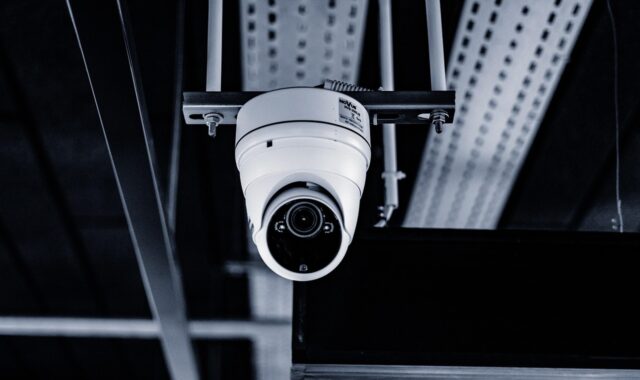
Access control becomes more valuable when it is connected to video and alarm data in a disciplined way. A door-forced event, denied credential, propped door, or after-hours entry is more useful when operators can immediately review associated camera footage. This reduces investigation time and helps distinguish a nuisance event from a real security concern.
Integration should be planned around use cases, not around a vague promise of a single pane of glass. For example, a warehouse may need video bookmarks for loading dock access. A school may need lockdown workflows. A data center may need dual authorization, anti-passback, and highly detailed audit trails. A multifamily building may need visitor management, elevator control, and package room oversight. See also: Access Control.
Organizations comparing access control with cameras, alarms, and video management can use the broader Surveillance Systems category to think about how these technologies support each other. The goal is not to connect everything by default. The goal is to connect the events that improve response, accountability, and operational clarity.
A practical evaluation framework before upgrading
The most reliable way to evaluate access control systems is to begin with the protected spaces, not the product brochure. A low-risk office door, a pharmacy storage room, a server cage, a school entrance, and a public lobby do not need the same credential rules or hardware design. Treating every opening the same can waste money in some areas while under-protecting others.
Map doors by risk and function
Start by listing each controlled opening and assigning its purpose. Is it a perimeter entrance, interior office, life-safety exit, elevator landing, vehicle gate, tenant amenity, restricted room, or emergency-only door? Then document traffic volume, user groups, after-hours needs, and consequences of unauthorized access.
Review identity lifecycle processes
An access control system is only as accurate as the data behind it. Confirm who approves access, who removes it, how quickly terminations are processed, how contractors are handled, and how temporary permissions expire. For larger organizations, integration with identity management, human resources, or tenant management platforms may be more important than adding another reader model.
Test failure scenarios
Ask vendors and integrators to explain what happens during power loss, network outage, controller failure, cloud service interruption, fire alarm activation, and credential database synchronization problems. A system that looks elegant during a demo may be difficult to operate when the site is busy, the network is down, or an administrator is unavailable.
Plan for audit and maintenance
Access permissions should be reviewed periodically, especially for sensitive areas. Door contacts, request-to-exit devices, locks, batteries, backup power, and event logs also need routine maintenance. A modern system should make these tasks easier, but it does not eliminate the need for clear ownership.
Common mistakes that weaken access control projects
The most common failure is designing around technology before defining the risk. Other recurring mistakes include leaving former employees active in the system, issuing shared credentials, failing to document exceptions, ignoring mechanical key control, using weak administrator passwords, and assuming that a locked door is code-compliant simply because it is electronically controlled.
User experience is another common weak point. If entry is slow, unreliable, or confusing, people will prop doors, borrow badges, ask others to hold doors open, or pressure administrators for broad access groups. Good security design should be hard to bypass and easy to use correctly.
Finally, organizations should avoid treating access control logs as useful only after an incident. Event data can reveal recurring door-prop problems, unusual after-hours patterns, underused entrances, training gaps, and maintenance issues. Those insights are valuable when they are reviewed regularly and handled with appropriate privacy boundaries.
Frequently asked questions
What is the main purpose of an access control system?
The main purpose is to manage who can enter specific spaces, at specific times, under specific conditions, while creating an audit record of access events. In physical security, it replaces or supplements mechanical keys with more manageable credentials and policies.
Are cloud-based access control systems secure?
They can be secure when designed and governed properly, but the answer depends on vendor architecture, administrator controls, encryption, uptime planning, data retention, and local fallback behavior. Buyers should evaluate cloud access control with the same seriousness they apply to other connected business systems.
Should a business replace key cards with mobile credentials?
Mobile credentials can be a strong option for many workplaces, but they are not universal. Businesses should consider user readiness, device policies, visitor access, backup methods, privacy expectations, and whether some doors require stronger authentication than a phone-based credential alone.
Do access control systems need to integrate with video surveillance?
Not always, but integration is often useful. Connecting access events to camera footage can speed investigations, improve alarm response, and help teams understand whether a denied entry, forced door, or propped door is a real threat or an operational issue.
What should be checked before installing electronic locks on egress doors?
Before installation, confirm applicable building and fire code requirements, authority approval, emergency release behavior, power loss behavior, signage, accessibility, and whether the selected hardware is appropriate for the door and occupancy. Life safety should be resolved before the system goes live.