How to choose the best outdoor surveillance camera for your property
a[data-rs-seo-link]{text-decoration:underline!important;color:#1a56db!important;cursor:pointer!important;}a[data-rs-seo-link]{text-decoration:underline!important;color:#1a56db!important;cursor:pointer!important;}
What makes an outdoor surveillance camera worth choosing
There is no single best outdoor surveillance camera for every property. If you are searching for the best surveillance camera outdoor, start with the job the camera needs to do: capture the right area clearly, keep operating in local weather, record usable footage at night, store video in a way you can manage, and avoid unnecessary cybersecurity or privacy risk. For most homes and small businesses, the site plan comes first. Review entry points, driveways, gates, yards, loading areas, parking spaces, and blind spots before comparing resolution, lens angle, night vision, power method, or app features.
This guide explains how to evaluate outdoor cameras in a practical way. It focuses on selection criteria, trade-offs, and installation decisions rather than unsupported product rankings. For more security planning topics, visit the Surveillance Systems section.
Start with coverage before comparing camera specs
The most common mistake in outdoor surveillance planning is buying a camera first and deciding where to place it later. A camera can have strong specifications and still fail if it is mounted too high, aimed too wide, blocked by glare, or placed too far from the activity it is supposed to identify. Good selection begins with a simple coverage map.
List the areas where footage would matter after an incident. For a home, these often include the front door, side gate, garage, driveway, backyard entry, and any walkway hidden from street view. For a small business, the priority may be entrances, delivery doors, cash-handling areas, exterior storage, parking spaces, and perimeter gates. Each camera should have a defined job: detection, recognition, identification, deterrence, or documentation.
Match the lens to the scene
A wide-angle camera can show more of a yard or storefront, but it may make faces, license plates, and small objects appear smaller. A narrower lens can capture more detail at a gate or entrance, but it covers less area. The best outdoor surveillance camera for a front porch may not be the best choice for a long driveway or warehouse yard. If the goal is to confirm that someone entered a property, a wider view may be enough. If the goal is to identify a face, vehicle, or object, the camera needs a tighter field of view, better placement, or additional cameras.
Use resolution as one factor, not the whole decision
Higher resolution can help, especially when a camera must cover a broader scene. However, resolution alone does not guarantee useful evidence. Compression, lens quality, sensor size, motion blur, lighting, and installation height all affect the final image. A well-placed 4 MP or 5 MP camera can be more useful than a poorly positioned 4K camera that points into glare or tries to cover too much distance.
Weather resistance, power, and connectivity decide reliability
Outdoor cameras need to handle dust, rain, heat, cold, wind, insects, and direct sun. Product pages often use weatherproof language loosely, so it is better to check specific enclosure ratings and installation guidance. The IEC 60529 IP code is the common reference for ingress protection; the first digit relates to solid-particle protection and the second to water protection. For exposed outdoor camera locations, buyers commonly look for ratings such as IP65, IP66, or IP67. The right level depends on whether the camera is under an eave, mounted on an open wall, exposed to wind-driven rain, or installed near splash-prone ground areas.
Understand what an IP rating does and does not prove
An IP rating is useful, but it is not a complete durability guarantee. It does not automatically show how well a camera handles long-term ultraviolet exposure, salt air, repeated freeze-thaw cycles, poor cable sealing, or incorrect mounting. A camera installed under a protected soffit faces different stress than one mounted on a pole in an open parking lot. For harsh environments, look beyond the rating and check temperature range, mounting hardware, cable-entry design, warranty exclusions, and whether the manufacturer provides specific outdoor installation instructions.
Choose the power method for the location
Power is one of the biggest practical differences between outdoor camera types. Power over Ethernet, often called PoE, uses one network cable for data and power. It is usually preferred for stable, fixed installations because it avoids battery changes and reduces reliance on wireless signal quality. Wi-Fi cameras are easier to place where cabling is difficult, but they need strong signal strength at the mounting location and a dependable power source. Battery cameras are flexible and useful for low-traffic areas, temporary coverage, rentals, or locations without wiring. Battery life can fall quickly when motion activity, cold weather, live viewing, or spotlight recording increases.
For critical entrances, business doors, or locations where missing footage would be costly, a wired camera is usually the safer choice. For occasional monitoring of a shed, side yard, or temporary project site, battery or solar-assisted cameras may be acceptable if expectations are realistic.
Image quality matters most after dark and during motion
Outdoor incidents often happen in difficult lighting: dawn, dusk, nighttime, rain, backlit entrances, headlights, reflective license plates, and shadows. The best outdoor surveillance camera for security is not simply the camera with the sharpest daytime sample image. It is the camera that records useful footage when lighting is uneven and subjects are moving.
Compare night vision options carefully
Infrared night vision is common and can produce clear black-and-white footage in darkness, but range varies widely. Built-in spotlights can record color video at night and may also act as a deterrent, but they can annoy neighbors or attract attention in ways that are not always welcome. Low-light sensors can perform well when there is ambient lighting from streetlights, porch lights, or business signage, but they may still struggle in complete darkness.
When evaluating night performance, look for realistic sample footage and consider where the light will come from in your own scene. A driveway camera facing headlights needs different handling than a porch camera under a fixed light. If a camera must capture vehicles, avoid aiming it directly into headlights or bright reflections whenever possible.
Motion detection should reduce noise, not hide events
Motion alerts are useful only if they are accurate enough to act on. Basic pixel-based motion detection can trigger on rain, insects, trees, shadows, and passing headlights. More advanced systems may offer person, vehicle, animal, or package detection. These features can reduce alert fatigue, but they are not perfect and should not replace good placement. A camera mounted near swaying branches or a busy street may still generate too many alerts unless detection zones and sensitivity are adjusted.
Before relying on alerts, test the camera at different times of day. Walk through the target area, approach from different angles, and check whether recorded clips begin early enough to show the full action. Pre-recording or event buffering can be useful because it captures a few seconds before motion is fully detected. See also: Access Control.
Cybersecurity and privacy should be buying criteria
Outdoor cameras are physical security devices, but most modern systems are also internet-connected devices. Selection should therefore include cybersecurity and privacy questions. The U.S. Federal Trade Commission advises consumers to update security camera software, avoid default usernames and passwords, use strong unique passwords, enable two-factor authentication where available, and make sure remote viewing is properly protected. CISA guidance on internet-connected devices also highlights the risk of default credentials and unnecessary internet exposure.
For buyers, this means a camera should be judged by more than image quality. Check whether the vendor has a clear firmware update process, whether two-factor authentication is supported, whether video streams are encrypted, and whether user permissions can be limited. If multiple people need access, separate user accounts are better than sharing one password. For businesses, cameras should be managed like other network devices, with inventory records, update schedules, account controls, and clear rules for remote access.
Privacy also matters. Avoid pointing cameras into neighboring windows, private yards, or areas where people have a reasonable expectation of privacy. In workplaces, landlords’ properties, shared residential buildings, and public-facing businesses, local laws and notice requirements may apply. Because surveillance laws vary by jurisdiction and use case, camera owners should confirm local requirements before recording audio, monitoring employees, or storing footage from shared spaces.
Compare camera types by real use case
No single outdoor camera type is best for every property. The table below summarizes common options and the situations where each one makes sense.
| Camera type | Best fit | Main advantage | Main limitation |
|---|---|---|---|
| PoE bullet camera | Driveways, gates, walls, business exteriors | Stable power and network connection | Requires cable routing and a recorder or network setup |
| PoE turret camera | Entrances, soffits, walkways | Good fixed coverage with less glare risk than some dome designs | Still needs proper aiming and wiring |
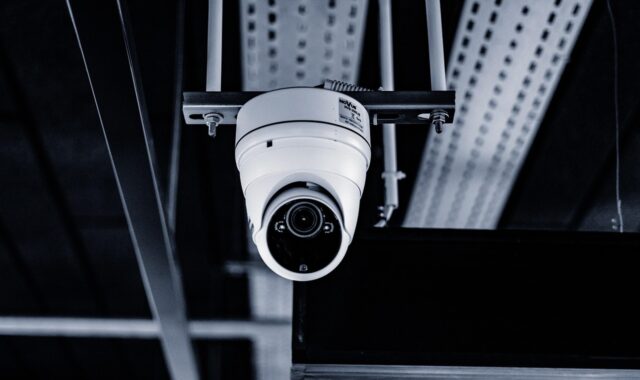
| Dome camera | Covered entries, commercial areas, vandal-prone locations | Protected lens and discreet appearance | Outdoor domes can suffer from glare or dirt on the cover if poorly placed |
| Wi-Fi plug-in camera | Homes, small offices, garages, patios | Easier installation than wired systems | Depends on strong Wi-Fi and nearby power |
| Battery camera | Temporary locations, sheds, low-traffic areas | Flexible placement with minimal wiring | Battery life and recording continuity vary with activity and weather |
| PTZ camera | Large yards, lots, warehouses, active monitoring | Can pan, tilt, and zoom across wide areas | May miss events outside its current view unless supported by fixed cameras |
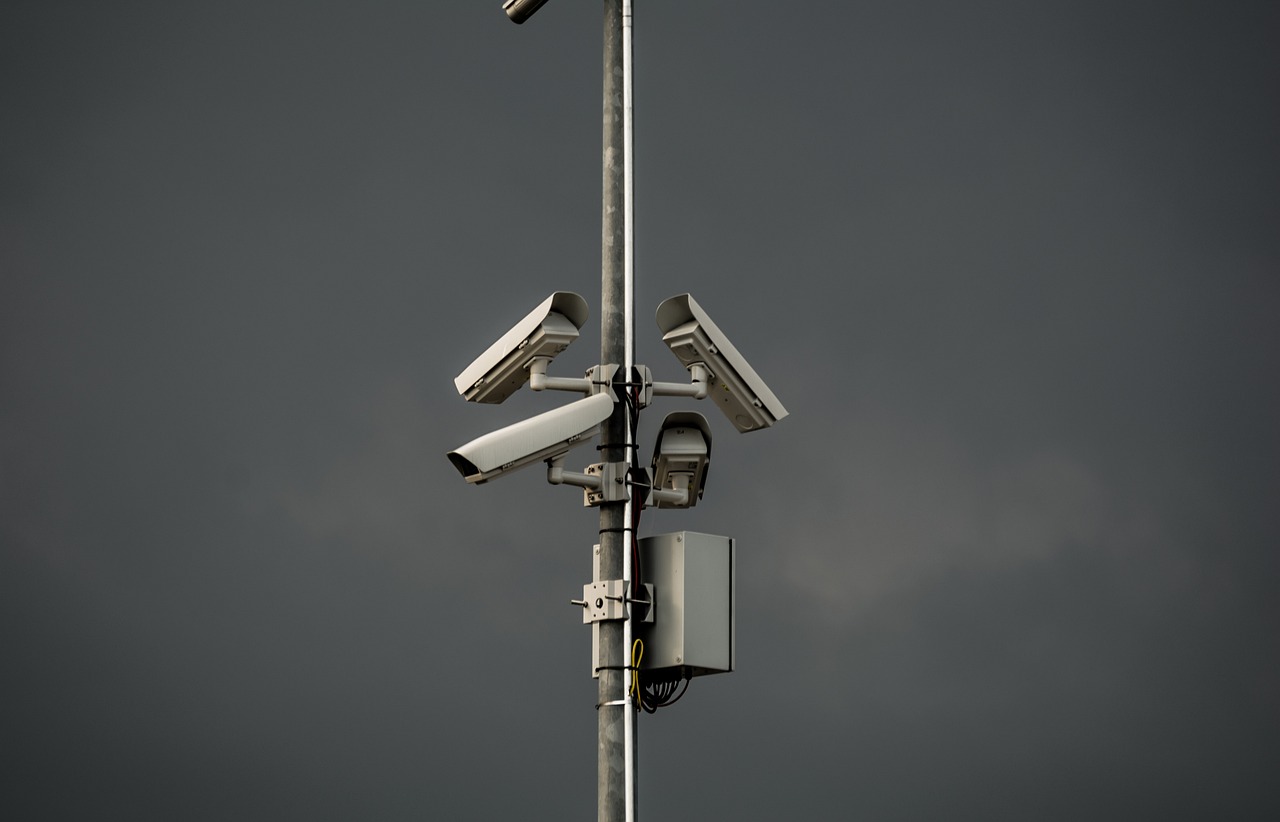
For many properties, a mixed design works better than using one camera type everywhere. Fixed cameras can cover entrances and chokepoints continuously, while a PTZ camera or wide-view camera can add context across a larger area. Battery cameras can fill temporary gaps, but they should not be the only protection for critical access points if continuous recording is required.
A practical checklist before you buy
Before choosing a camera, answer these questions in order. They will usually narrow the options more effectively than browsing long product lists.
- What is the main goal? Deterrence, live monitoring, evidence after an incident, package visibility, vehicle documentation, or perimeter awareness?
- What area must be covered? Measure the distance from the camera position to the target area, not just the width of the scene.
- What lighting exists at night? Consider porch lights, streetlights, headlights, shadows, and complete darkness.
- How exposed is the camera? Check rain direction, sun exposure, dust, snow, insects, salt air, and possible vandalism.
- Can you run cable? If yes, PoE may provide the most dependable long-term installation. If no, evaluate Wi-Fi strength and power access before buying.
- Where will video be stored? Options may include local NVR storage, memory card recording, cloud storage, or a hybrid approach. Each has cost, privacy, and reliability trade-offs.
- Who can access the footage? Use unique accounts, strong passwords, two-factor authentication where available, and limited permissions.
- How long do you need to keep recordings? Retention needs affect storage size, subscription cost, and privacy risk.
The strongest buying decision is usually the one that balances evidence quality with maintenance. A camera that needs constant charging, produces hundreds of false alerts, or requires confusing account sharing may not remain useful after the first few weeks. Reliability over time matters more than a long feature list.
Frequently asked questions
Is 4K always better for an outdoor security camera?
Not always. 4K can help when the camera covers a wide area or when detail is important, but it also increases storage and bandwidth needs. Placement, lens angle, night performance, compression quality, and lighting often matter as much as resolution. A lower-resolution camera aimed at a doorway may produce more useful footage than a 4K camera mounted too high or too far away.
Should I choose wired or wireless for outdoor surveillance?
Choose wired, especially PoE, when reliability and continuous recording are priorities. Choose Wi-Fi or battery cameras when wiring is difficult, the area is low risk, or the installation is temporary. Wireless cameras can work well, but they depend on signal quality, power availability, and proper network security.
What IP rating should I look for in an outdoor camera?
For outdoor use, many buyers look for IP65, IP66, or IP67-rated cameras depending on exposure. A sheltered porch may not need the same protection as an open wall or pole mount. The IP rating should be considered alongside temperature range, cable sealing, installation instructions, and the real weather conditions at the site.
Do outdoor cameras need cloud storage?
No. Cloud storage can make remote access and backup easier, but it may involve subscription costs and privacy considerations. Local storage through an NVR or memory card can reduce ongoing fees, but it must be protected from theft, damage, and storage failure. Some systems combine local recording with cloud event backup.
What is the best outdoor surveillance camera for most people?
For many homes and small businesses, the best choice is a weather-rated camera with reliable power, clear night recording, adjustable motion zones, secure account controls, and storage that fits the user’s retention needs. The exact model depends on the location, but the decision should begin with coverage and reliability rather than brand claims alone.