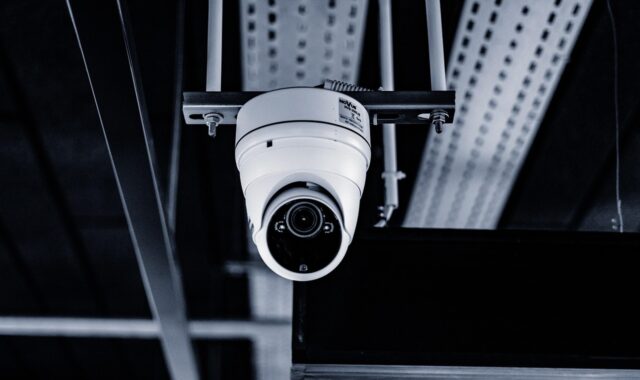
Night Owl surveillance cameras guide for wired, Wi-Fi, and wire-free systems

a[data-rs-seo-link]{text-decoration:underline!important;color:#1a56db!important;cursor:pointer!important;}a[data-rs-seo-link]{text-decoration:underline!important;color:#1a56db!important;cursor:pointer!important;}
Night Owl surveillance cameras are best understood as DIY, self-monitored video security systems built around local recording, optional remote viewing, and several installation formats. As of October 13, 2026, the brand’s public product and support information points to three broad choices: wired DVR or NVR systems, Wi-Fi systems with fewer cables, and wire-free battery or solar-assisted cameras.
The appeal is straightforward. Buyers can record locally without a mandatory monthly subscription, while still using the Night Owl Protect app for supported alerts, live view, playback, sharing, and optional cloud access on compatible devices. The tradeoff is that real-world performance depends on model compatibility, power, Wi-Fi strength, cable routing, recorder capacity, firmware, and mounting position.

For broader context on camera categories and deployment decisions, see our Surveillance Systems section.
What Night Owl systems are trying to solve
Night Owl serves a specific part of the home and small-business surveillance market. It is not primarily a professionally monitored alarm platform. It is also not a cloud-first camera ecosystem where most recording value depends on a subscription. The brand focuses on video surveillance kits that a buyer can install, record to local storage, and monitor through a recorder, hub, or supported mobile app.
That positioning matters because many shoppers are not only asking whether the image looks sharp. They are trying to answer a practical question: can this system cover a driveway, porch, shop entrance, garage, side yard, or small office without creating a continuing service bill? For that use case, Night Owl’s wired and hybrid systems can be attractive because they keep the recorder at the center of the setup.
Each kit still needs to be evaluated as its own system. Camera resolution, channel count, storage size, audio features, spotlight capability, smart detection, app compatibility, and add-on camera limits vary by product line. A 2K battery camera, a 4K wired camera, and a DVR bundle with analog-style cabling may share the Night Owl name, but they should not be treated as interchangeable parts.
Current system types and where each fits
Night Owl’s public product catalog and support pages describe several installation approaches. The differences are practical, not cosmetic, because they affect reliability, maintenance, and the type of property each system suits.
| System type | Best fit | Main advantage | Important limitation |
|---|---|---|---|
| Wired DVR or NVR systems | Homes or small businesses that need continuous coverage across fixed camera locations | More stable connection because video depends less on Wi-Fi signal quality | Requires cable planning, power considerations, and more installation effort |
| Wi-Fi recorder or hub systems | Properties where running cable to every camera is difficult | Fewer long cable runs and more flexible camera placement | Performance depends on signal strength, distance, interference, and network layout |
| Wire-free battery systems | Entrances, sheds, gates, or locations where power and cables are inconvenient | Easier physical installation and relocation | Battery management and motion-triggered recording limits must be considered |
| Solar-assisted cameras | Outdoor areas with suitable sunlight exposure | Can reduce charging maintenance when installed correctly | Solar performance depends on sunlight, weather, placement, and power demand |
| Add-on cameras | Expanding an existing compatible Night Owl recorder or hub | Can increase coverage without replacing the entire system | Compatibility must be verified by exact series, recorder, channel count, and app support |
For a long-term installation, wired systems are usually the most predictable choice. If a camera is watching a driveway, loading door, register area, or parking approach, connection stability may matter more than avoiding a cable run. Wi-Fi and wire-free cameras are useful when installation constraints are real, but wireless does not automatically mean lower maintenance. Weak signal, thick walls, metal siding, router placement, and battery cycles can all affect day-to-day performance.
A practical design approach is to separate cameras by mission. Use wired cameras for high-priority zones where missing footage would be a serious problem. Use Wi-Fi or wire-free cameras for secondary angles, temporary coverage, or locations where cable installation is not realistic.
Storage, subscriptions, and remote viewing
One reason Night Owl attracts attention is its emphasis on local storage and no mandatory monthly subscription. The company’s support information states that a DVR does not require an internet connection for basic operation. Internet access is needed when the user wants remote viewing on a computer or smart device. That distinction matters: local recording and remote access are related, but they are not the same function.
In a local-first setup, footage is stored on a hard drive, microSD card, hub, or recorder, depending on the model. This can reduce dependence on paid cloud storage and may appeal to users who want more control over their footage. It also puts more responsibility on the owner. Retention time, overwrite behavior, storage health, export procedures, and power or network outage behavior should all be understood before the system is relied on.
Night Owl also offers cloud-related functions for compatible devices and plans. Public support documentation says cloud storage can overwrite older recordings when full, and that some devices can use both cloud storage and a microSD card. The Night Owl Protect app listing describes features such as live view, mobile alerts, playback filters, saving and sharing recordings, two-step verification, and support for features such as two-way audio or sirens on applicable models. The same listing notes that not all features apply to all devices.
The practical takeaway is simple: do not buy based on the app feature list alone. Check whether the exact model supports the alert type, recording method, cloud option, audio feature, and storage behavior you expect. A camera that supports human detection, vehicle detection, or two-way audio in one bundle does not mean every Night Owl camera supports those features.
Installation details that shape real performance
Security camera performance is often decided before the first recording is saved. Camera placement, mounting height, cable quality, power delivery, weather exposure, and network strength can matter as much as advertised resolution.
Night Owl’s own support guidance recommends mounting cameras at least 7 feet above the ground and angling them slightly downward. It also notes that infrared motion detection works best when movement crosses the camera’s field of view from side to side, rather than moving directly toward or away from the camera. This is especially relevant outdoors. A camera aimed straight down a walkway may still capture people, but detection can be less reliable than a camera positioned to catch lateral movement.
Outdoor mounting also deserves attention. Night Owl describes supported outdoor cameras as weatherproof for normal moisture and debris, but its support guidance recommends placing outdoor cameras under an eave or awning when possible. That advice is practical. Direct rain, intense sun, wind-blown dust, insects, and freeze-thaw cycles can all shorten the useful life of outdoor electronics.
Power is another common weak point. If a camera stops working at night, support materials point to the possibility that the camera is not receiving enough power for night vision LEDs. Troubleshooting should therefore include power adapters, splitters, cable runs, and connections, not only app settings. For wired cameras, cable length and connector condition are part of system reliability. For wireless cameras, router position, hub placement, and interference from walls or appliances are just as important. See also: Access Control.
Privacy, security, and compatibility checks
Night Owl’s brand messaging places strong emphasis on privacy and local control. That is relevant because many buyers prefer surveillance systems that do not require routine cloud upload for basic recording. Privacy still needs to be evaluated at the model and account level. If a user enables remote viewing, cloud recording, push alerts, account sharing, or mobile playback, data necessarily moves through apps, networks, and account systems.
The Night Owl Protect app listing describes two-step verification and single sign-on features, while also noting mobile data use for live video streaming. Buyers should treat these details as part of ownership planning. A camera system can be subscription-free for local recording and still depend on an internet connection for remote access, notifications, app updates, or cloud features.
Compatibility is another major issue. Night Owl has used multiple apps and product generations over time, including newer devices tied to Night Owl Protect and older systems associated with earlier apps. Support guidance indicates that setup requirements can differ between newer Protect-compatible systems and older systems. Before buying an add-on camera, replacement recorder, or refurbished bundle, verify the exact model number against the recorder series and app support list.
Organizations with procurement requirements should go further. Manufacturer statements about regulatory or supply-chain compliance are useful starting points, but public agencies, contractors, schools, and regulated businesses should confirm model-level documentation before purchase. That extra step is especially important when surveillance equipment must satisfy written procurement rules rather than general consumer expectations.
A practical buying checklist
Before choosing a Night Owl kit, start with the surveillance problem rather than the product box. A lower-resolution camera placed correctly may provide more useful evidence than a higher-resolution camera pointed into glare, mounted too high, or installed beyond reliable Wi-Fi range.
- Map coverage first. Identify entrances, driveways, gates, blind spots, and interior choke points before selecting the number of cameras.
- Decide which zones need continuous reliability. Use wired cameras where missed footage would matter most.
- Check storage expectations. Confirm whether the system records to a hard drive, microSD card, hub, cloud plan, or a combination.
- Confirm remote viewing needs. If off-site access is important, the recorder or camera must be connected and configured for app access.
- Verify exact compatibility. Match add-on cameras by recorder series, app support, resolution, channel count, and power type.
- Plan for weather protection. Use eaves, awnings, sheltered mounting points, and proper cable routing when possible.
- Review app features by model. Do not assume every camera supports the same alerts, audio, siren, spotlight, or playback tools.
- Think about maintenance. Battery charging, firmware updates, hard drive health, password management, and footage export should all be part of the plan.
For most homeowners, the strongest Night Owl use case is a local-recording system with several fixed cameras and a clear installation plan. For renters or properties where drilling and cabling are not practical, wire-free or solar-assisted options may be more realistic, but the buyer should accept the added dependence on battery behavior and wireless conditions.
Frequently asked questions
Do Night Owl surveillance cameras require a monthly subscription?
Night Owl promotes systems that do not require a mandatory monthly subscription for basic local recording. Optional cloud plans may be available for compatible devices, but buyers should confirm the exact model and recording method before purchase.
Can a Night Owl DVR work without the internet?
For basic local operation, Night Owl support information says a DVR does not require an internet connection. Internet access is needed if the owner wants remote viewing through a computer or smart device.
Are wired Night Owl cameras better than wireless models?
They are better for some jobs, but not all. Wired cameras are usually better for fixed, high-priority coverage because they are less dependent on Wi-Fi conditions. Wireless and wire-free cameras are better when cable installation is difficult or when flexible placement matters more than maximum connection stability.
Can I add new cameras to an older Night Owl system?
Possibly, but compatibility must be checked carefully. Add-on cameras are not universal across all Night Owl recorders, apps, and product generations. Match the exact camera model to the recorder series and supported app before buying.
What is the biggest mistake to avoid when buying Night Owl cameras?
The biggest mistake is buying by resolution or price alone. A useful surveillance system depends on camera placement, recorder capacity, power, storage, app support, compatibility, and network reliability. Confirm those details before choosing a kit.
Bottom line
Night Owl surveillance cameras make the most sense for buyers who want DIY video coverage, local recording, and optional remote access without being forced into a recurring subscription for basic use. The brand’s range is broad enough to cover wired, Wi-Fi, wire-free, battery, solar-assisted, doorbell, indoor, and add-on use cases, but that variety also makes model checking essential.
If reliability is the priority, start with wired coverage for the most important areas and add wireless cameras only where they solve a real installation problem. If convenience is the priority, choose battery or solar-assisted models with realistic expectations about charging, sunlight, signal quality, and recording behavior. In either case, the best purchase is not simply the newest or highest-resolution Night Owl camera. It is the system that matches the property layout, storage needs, remote viewing expectations, and maintenance capacity of the owner.