Renofix maintenance and facilities management due diligence for safe building operations
a[data-rs-seo-link]{text-decoration:underline!important;color:#1a56db!important;cursor:pointer!important;}a[data-rs-seo-link]{text-decoration:underline!important;color:#1a56db!important;cursor:pointer!important;}
Why this search deserves a safety-first reading
People searching for renofix maintenance and facilities management are usually trying to verify a specific provider name, not learn a generic definition of facilities management. They may want to understand the likely service scope, whether the company is relevant to building maintenance and inspections, and what checks are needed before allowing contractor access to operational areas.
Public UAE records identify an entity using the Renofix Maintenance & Facilities Management name. That is a useful starting point, but it should not be treated as proof of current licensing, insurance, worker competence, emergency response capability, or service quality. For facility owners, security teams, and property managers, the practical question is narrower: what should be verified before any maintenance provider works on life-safety, access, electrical, HVAC, plumbing, pool, laboratory, or other critical building systems?
This article uses publicly available official records and recognized facilities-management frameworks to build a buyer-side due diligence checklist. It is not an endorsement, rating, or investigative profile. For more articles in this topic area, see Costcola’s Maintenance and Testing section.
What public records can and cannot tell you
As of October 20, 2026, Abu Dhabi Department of Municipalities and Transport public engineering-firm data listed Renofix Maintenance & Facilities Management – Sole Proprietorship L.L.C. under registry number CN-2521648, with an engineering contracting company classification and a listed validity date of June 13, 2027. UAE National In-Country Value supplier data also listed a Renofix Maintenance & Facilities Management entity with categories including buildings maintenance, facilities management services, swimming pool maintenance, medical and laboratory equipment installation, maintenance and repair, and onshore and offshore oil and gas field and facilities services.
These records are useful because they show that the name appears in official or government-linked datasets and indicate broad activity categories associated with the company. They do not, however, answer the main procurement questions. They do not prove that a specific technician is competent for a specific asset, that insurance is active today, or that the company is approved by the authority having jurisdiction for fire, civil defense, electrical, medical equipment, or pool-related work. They also do not prove that a proposed work scope matches the license categories currently held.
The safe interpretation is therefore limited. Public records can help identify a business name, jurisdiction, classification, and broad activity areas. Before a site visit or contract award, buyers should request current copies of trade licenses, classification certificates, insurance, worker qualification records, method statements, risk assessments, equipment calibration certificates, and references for comparable assets.
Why facilities management affects security and safety
Facility management is not just cleaning, repairs, or general handyman support. ISO 41011 defines facility management as an organizational function that integrates people, place, and process within the built environment to improve quality of life and the productivity of the core business. IFMA describes facilities management in similar terms, with emphasis on functionality, comfort, safety, sustainability, and efficiency. In day-to-day building operations, that means maintenance work can directly affect whether a site remains secure, compliant, and usable.
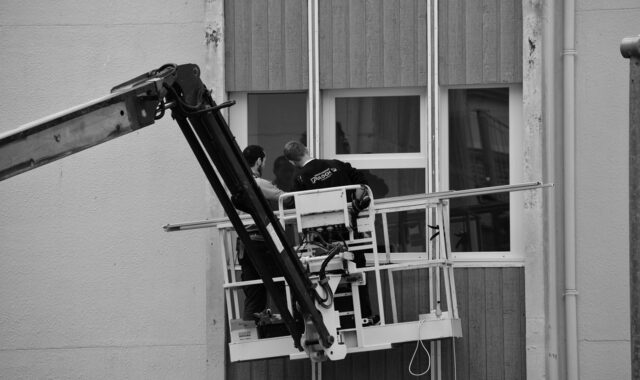
A poorly controlled maintenance visit can create security risk even when the work order looks routine. A propped-open service door can bypass access control. Work above a ceiling can disturb fire stopping or data cabling. A poorly documented lock replacement can create key-control gaps. CCTV cameras may be moved during ceiling works and never re-aimed. A water leak repair may require isolating pumps that also serve life-safety systems. For these reasons, facilities management should be treated as an operational risk function, not only as a cost center.
For security and safety teams, the question is not whether maintenance is necessary. It is whether maintenance is planned, authorized, supervised, recorded, and tested after completion. A mature facilities contractor should be able to work within a permit-to-work system, provide task-specific risk controls, and close each work order with evidence that the affected asset has been returned to a safe and functional condition.
Maintenance and testing evidence to request
The table below gives a practical evidence checklist for evaluating Renofix Maintenance and Facilities Management or any similar provider. The exact documents will vary by jurisdiction, asset type, contract model, and the requirements of the authority having jurisdiction.
| Area to verify | Why it matters | Evidence to request |
|---|---|---|
| Company identity and license scope | The provider name and proposed work must match current legal and activity approvals. | Current trade license, classification certificate, registered activity categories, authorized signatory details, and any authority-specific approvals. |
| Technician competence | Maintenance quality depends on the person performing the task, not only the company name. | Training records, trade certificates, equipment-specific authorization, supervision plan, and language-appropriate safety briefings. |
| Fire and life-safety systems | Sprinklers, pumps, alarms, emergency lighting, smoke control, and fire doors require strict inspection and testing discipline. | Applicable civil defense approvals, inspection forms, impairment procedures, test reports, corrective action logs, and restoration sign-off. |
| Electrical and mechanical systems | Uncontrolled maintenance can expose workers and occupants to energy, heat, water, and equipment hazards. | Lockout or isolation procedures, method statements, risk assessments, preventive maintenance schedules, and post-maintenance test records. |
| Access control, doors, locks, and CCTV | Security devices often depend on coordinated mechanical, electrical, network, and building works. | Access authorization records, change logs, camera aim checks, door hardware test sheets, key-control procedure, and handover notes. |
| Special assets such as pools, labs, or medical equipment | These assets may involve chemical, hygiene, electrical, calibration, or specialist compliance risks. | Specialist approvals, chemical handling controls, calibration certificates, manufacturer procedures, and asset-specific inspection logs. |
For water-based fire protection systems, NFPA 25 is a widely recognized standard for inspection, testing, and maintenance. It establishes minimum requirements for periodic inspection, testing, and maintenance of these systems, but it does not replace local law or the decision of the authority having jurisdiction. Buyers should therefore ask which standard, code, local approval, and manufacturer instruction apply to each asset, rather than accepting a general statement that maintenance will be done regularly.
Contractor safety controls that should be non-negotiable
In Abu Dhabi, occupational safety and health duties are shaped by the Abu Dhabi Occupational Safety and Health System and related codes of practice. ADPHC code-of-practice listings show multiple Version 4.0 documents with an effective date of July 15, 2024, covering topics such as hazardous materials, personal protective equipment, occupational noise, first aid, heat safety, waste management, and other workplace controls. These topics are directly relevant to facilities work because maintenance tasks often involve confined or restricted spaces, energized systems, elevated work, hot environments, chemicals, ladders, plant rooms, and waste handling.
For international benchmarking, OSHA lockout/tagout rules in the United States are often referenced because they address the control of hazardous energy during servicing and maintenance of machines and equipment. Even where OSHA is not the legal authority, the underlying principle is useful: workers should not rely on hope, habit, or verbal warnings when equipment can unexpectedly energize, move, release pressure, start, or expose them to electrical or mechanical hazards.
Before work starts, a facilities provider should be able to explain how it will control access to the work area, isolate hazardous energy, protect occupants, communicate impairments, manage hot work if applicable, and escalate unsafe conditions. For occupied buildings, the plan should also cover tenant communication, after-hours access, visitor badges, escort rules, emergency contacts, and restoration of normal operations.
Questions to ask before awarding a maintenance contract
A short, specific question list is often more useful than a long generic vendor questionnaire. Buyers evaluating Renofix Maintenance and Facilities Management or a comparable contractor can start with these points: See also: Access Control.
- Which legal entity will sign the contract, and does its current license cover every service in the proposed scope?
- Which services will be performed by direct employees, and which will be subcontracted?
- Who is the named account supervisor, and what authority does that person have during emergencies?
- What response times are proposed for emergency, urgent, routine, and planned work orders?
- Which assets are excluded from the scope, and which require separate specialist approval?
- How are preventive maintenance schedules created, updated, and evidenced?
- How are life-safety impairments reported, approved, monitored, and closed?
- What records will be delivered after each inspection, test, repair, or replacement?
- How are technicians trained on site rules, access control, permit-to-work procedures, and incident reporting?
- What insurance cover applies to property damage, worker injury, professional errors, and subcontractor activity?
The answers should be written into the service agreement, not left in a sales conversation. A good facilities contract links scope, service levels, safety obligations, documentation, escalation, exclusions, pricing, and termination rights. It should also define who owns asset data and how records will be handed over if the contract ends.
Red flags when records and proposals do not line up
The clearest red flag is a mismatch between the proposed service and the provider’s documented authorization. A broad facilities management listing, for example, does not automatically prove approval to maintain fire systems, medical equipment, elevators, gas systems, or specialized electrical assets. Another warning sign is reluctance to provide current documents. If a provider cannot promptly share license evidence, insurance certificates, safety procedures, technician qualifications, and sample reports, the buyer should slow the process down.
Pricing can also signal risk. A proposal that is much lower than competing bids may exclude after-hours response, consumables, specialist testing, authority inspections, spare parts, asset tagging, reporting, or corrective maintenance. The lowest bid may become expensive if it leads to shutdowns, repeated callouts, safety incidents, or non-compliance findings.
Vague maintenance language is another issue. Phrases such as comprehensive service, full support, or regular inspection are not enough. The contract should name asset groups, task frequencies, test methods, acceptance criteria, reporting format, responsible party, and escalation path. If the provider cannot define how performance will be measured, the buyer may struggle to prove whether the service was delivered.
A practical review workflow for facility owners
A balanced vendor review does not need to be slow, but it should be disciplined. Start by confirming the legal entity and public records. Then map the proposed scope against asset categories, regulatory requirements, and internal risk priorities. Next, request documentary evidence for licenses, insurance, safety controls, staffing, and sample maintenance reports. After that, run a technical interview with the proposed supervisor, not only the sales contact.
For high-risk assets, consider a pilot inspection or limited work order before granting wider access. Use that pilot to evaluate punctuality, site behavior, documentation quality, tool control, communication, housekeeping, and post-work testing. If the contractor will have keys, badges, plant-room access, or after-hours entry, involve the security team early. Maintenance access is still access, and it should be governed with the same discipline as any other sensitive site permission.
The outcome should be a documented decision. That decision may be to proceed, request clarifications, limit the scope, require a specialist subcontractor, or reject the proposal. The important point is that the decision is based on verifiable evidence rather than name recognition alone.
Frequently asked questions
What does Renofix Maintenance and Facilities Management appear to do?
Public UAE supplier and engineering-firm records associate the Renofix Maintenance & Facilities Management name with facilities management services, building maintenance, swimming pool maintenance, and several specialist activity categories. Buyers should verify the current live license, jurisdiction, and approved scope before relying on those categories for procurement.
Is a public supplier listing enough to approve a facilities contractor?
No. A public listing helps confirm that a name appears in a dataset, but it does not prove current insurance, technician competence, project performance, specialist approvals, or suitability for a particular building. It should be treated as the first step in due diligence.
Which maintenance records should a building owner keep?
Owners should keep asset registers, preventive maintenance schedules, work orders, inspection and test reports, corrective action records, impairment logs, permits, calibration certificates, spare-part records, incident reports, and final completion sign-offs. Records should be searchable and retained according to local legal and insurance requirements.
Should security teams be involved in maintenance contractor approval?
Yes. Maintenance contractors may need plant-room access, roof access, keys, badges, network rooms, risers, tenant areas, or after-hours entry. Security teams should help define escort rules, access windows, badge controls, CCTV coverage, key logs, and procedures for revoking access when work ends.
How often should fire and life-safety systems be inspected?
The correct frequency depends on the system type, local authority requirements, applicable codes, manufacturer instructions, and building risk profile. Standards such as NFPA 25 provide structured requirements for water-based fire protection systems, but local civil defense or the authority having jurisdiction should always guide the final compliance obligation.