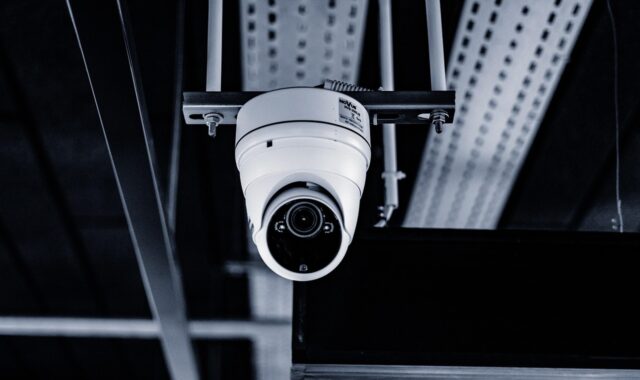
How alarm systems and surveillance systems work together to reduce property risk

a[data-rs-seo-link]{text-decoration:underline!important;color:#1a56db!important;cursor:pointer!important;}a[data-rs-seo-link]{text-decoration:underline!important;color:#1a56db!important;cursor:pointer!important;}
Why alarm systems are no longer stand-alone devices
Alarm systems are designed to detect a condition that needs attention, trigger a local alert and send useful information to the right people. In homes, offices, retail sites and small facilities, that usually means more than a siren on the wall. A stronger plan connects intrusion sensors, video cameras, communications, user permissions and response procedures so the system supports a clear decision. The FBI’s August 14, 2026 release on 2025 reported crime statistics said estimated property crime declined 12.4% from 2024 to 2025, with burglary down 15.8%. That trend is encouraging, but it does not remove site-specific risk. Local conditions, building layout, response time, staff behavior and false alarm history still matter.
The practical question is not whether a property needs the most expensive equipment. It is whether the system can answer four questions quickly: what happened, where it happened, whether a person or hazard is actually present, and who should respond.

What an alarm system actually includes
A basic alarm system has three layers: detection, control and notification. Detection devices identify a change in the environment. The control panel or hub interprets that signal. Notification devices then warn occupants, owners, monitoring operators or emergency responders, depending on how the system is configured.
Common components include door and window contacts, motion sensors, glass-break sensors, panic buttons, sirens, keypads, mobile app controls, backup batteries and communication modules. More complete systems may also include smoke alarms, carbon monoxide alarms, water leak sensors, temperature sensors and access control inputs. Fire and life-safety devices need particular care because they may be subject to building codes, insurance requirements and inspection rules that differ from ordinary intrusion detection.
It is also important to separate a notification from a verified event. A sensor can report that a door opened or motion occurred. A camera, access log or trained operator may be needed to determine whether the event was a break-in, a delivery, an employee mistake, a pet, poor sensor placement or weather-related movement.
How alarms and cameras create a stronger surveillance plan
Alarm systems and camera systems solve different parts of the same problem. Sensors are usually better at immediate detection. Cameras are better at context. When both are planned together, a property owner can reduce blind spots, improve event review and make a more informed decision before requesting help.
For example, a rear door contact may show that a door opened after hours. A nearby camera can show whether someone entered, whether the door failed to latch, or whether an authorized employee forgot to disarm the system. A motion sensor inside a warehouse aisle may detect activity, while video can show whether the movement came from a person, forklift, hanging sign or animal. This pairing is especially useful for businesses that want better documentation without sending police to every low-information signal.
For broader camera placement and system planning, see the surveillance systems section for related guidance.
| Security need | Alarm contribution | Surveillance contribution |
|---|---|---|
| After-hours intrusion | Door, motion or glass-break detection | Video verification and event review |
| Staff-only areas | Keypad, badge or sensor alerts | Visual record of access events |
| Perimeter awareness | Gate, fence or exterior motion alerts | Camera view of approach paths |
| False alarm reduction | Better sensor programming and delays | Visual confirmation before escalation |
Monitoring options and response expectations
Alarm systems generally fall into three response models. A local-only system sounds a siren or strobe but does not automatically contact a monitoring center. A self-monitored system sends app alerts to the owner or authorized users. A professionally monitored system sends signals to a monitoring center that follows a defined dispatch procedure.
Local-only systems may be suitable for low-risk situations, but they rely on someone nearby hearing or seeing the alert. Self-monitoring offers flexibility, but it depends on the user being awake, available and able to assess the event. Professional monitoring can provide a more formal response path, but it also brings recurring cost, contract terms and the need to keep contact lists, passcodes and cancellation procedures current.
Response expectations should be realistic. A monitoring center usually does not “see everything” unless cameras or verification tools are connected and the proper permissions are in place. Police response policies also vary by city and county. Some jurisdictions require alarm permits, fine repeated false alarms or prioritize verified events. Before installation, owners should check local ordinances and ask providers how they handle cancellation windows, video verification, panic alarms and emergency contact updates.
Standards that help evaluate alarm systems
Standards do not replace a site assessment, but they give buyers a more reliable vocabulary than marketing claims. UL 827 covers central-station alarm services, while UL 681 addresses installation and classification of burglar and holdup alarm systems. These standards are especially relevant in commercial, mercantile, banking or insurance-sensitive environments where documentation and service classification may matter.
For false alarm reduction, the Security Industry Association’s ANSI/SIA CP-01-2019 standard describes control panel and arming features intended to reduce false alarm dispatches for residential and commercial electronic security systems. Features associated with this type of approach include clearer exit and entry timing, better user feedback, more consistent arming behavior and improved handling of alarm signals.
Another important development is ANSI/TMA-AVS-01 2024 from The Monitoring Association. It defines alarm validation scoring levels for burglar alarm events, ranging from no call for service to confirmed threat to life. The purpose is to give public safety answering points and emergency communications centers more consistent information about the confidence level and severity of a monitored event. For buyers, the useful takeaway is straightforward: ask whether a monitoring provider supports modern validation practices and how it communicates alarm priority.
Planning details that affect reliability
Many alarm failures are not caused by bad technology. They come from weak planning, poor placement, neglected maintenance or unclear user behavior. A motion sensor aimed at a heat source, a contact on a loose door, a camera with glare, a dead backup battery or an outdated call list can all reduce system value. See also: Access Control.
- Map likely entry paths. Start with doors, accessible windows, roll-up doors, roof hatches, loading areas and interior choke points.
- Match sensors to conditions. Exterior areas, pets, HVAC movement, reflective surfaces and high ceilings may require different sensor choices.
- Plan communications backup. If the system depends on broadband, consider cellular backup and battery capacity for outages.
- Control user permissions. Remove former employees, contractors or tenants promptly and avoid shared codes where accountability matters.
- Schedule testing. Test sensors, sirens, app alerts, monitoring contacts and backup power according to manufacturer and provider instructions.
For fire safety, follow code, manufacturer instructions and local authority requirements. Public guidance from NFPA and the U.S. Fire Administration commonly emphasizes smoke alarms inside sleeping rooms, outside sleeping areas and on every level of a home. That guidance should not be replaced by a general security system checklist.
Cybersecurity and privacy should be part of the purchase decision
Connected alarm systems are part of a property’s digital environment. If a hub, camera or mobile app is poorly secured, the risk is not only physical. Account takeover, exposed video, weak passwords and unsupported devices can create avoidable privacy and security problems.
NIST’s consumer IoT guidance identifies capabilities such as product configuration, data protection, software updates and access control as important cybersecurity outcomes for connected products. The FTC also recommends practical steps such as changing default passwords, securing Wi-Fi, using strong encryption settings and keeping device software updated.
When comparing alarm systems, ask how long the manufacturer supports updates, whether multi-factor authentication is available, what data is stored in the cloud, who can access video clips, and how permissions are removed. For businesses, the review should also include employee privacy notices, retention settings and state or local rules that may apply to audio recording or workplace surveillance.
How to choose without overbuying
The best-fit system is the one that matches the risk, not the one with the longest feature list. A small office may need reliable door contacts, a keypad, a few verified cameras and professional monitoring. A larger retail or warehouse site may need partitioned alarm areas, access control integration, more detailed user permissions, monitored panic buttons and a documented opening and closing procedure.
Before requesting quotes, define the property type, operating hours, highest-value assets, likely entry points, history of incidents, insurance requirements and who will respond to alerts. Then compare systems on measurable criteria: sensor coverage, camera verification, monitoring workflow, backup communications, standards alignment, cybersecurity support, maintenance requirements and total monthly cost.
A good alarm plan should be easy enough for authorized users to operate correctly. If the system is confusing, people bypass it, share codes or ignore notifications. That is why training, signage, user roles and periodic review are as important as the equipment itself.
Frequently asked questions
Are alarm systems the same as surveillance systems?
No. Alarm systems detect and report events, while surveillance systems record or display visual information. They are often strongest when combined because alarms provide immediate triggers and cameras provide context for verification.
Do I need professional monitoring?
It depends on the risk and response expectation. Professional monitoring may be useful when a property is vacant after hours, has higher-value assets, or needs a formal dispatch process. Self-monitoring may be enough for lower-risk locations where responsible users can reliably respond.
What causes most false alarms?
Common causes include user error, poor sensor placement, loose doors or windows, pets, environmental movement, weak batteries and unclear arming procedures. Better training, maintenance, verification and CP-01-style control features can help reduce unnecessary dispatches.
Should cameras be installed before alarms?
Neither should be planned in isolation. Start with the risk map, then decide where sensors should detect activity and where cameras should verify it. In many properties, the best design uses both from the beginning.
How often should an alarm system be reviewed?
Review the system whenever the layout, tenants, staff, operating hours or inventory changes. At minimum, test key functions periodically, update contact lists and confirm that batteries, communications and user permissions are still current.