What a car maintenance service should include and when to schedule it
a[data-rs-seo-link]{text-decoration:underline!important;color:#1a56db!important;cursor:pointer!important;}a[data-rs-seo-link]{text-decoration:underline!important;color:#1a56db!important;cursor:pointer!important;}
What a car maintenance service is for
A car maintenance service should confirm that the vehicle is safe to drive, mechanically sound, and being serviced at an interval that fits its age, mileage, and operating conditions. For most owners, the best starting point is the manufacturer’s maintenance schedule, rather than a generic checklist or the most aggressive sales recommendation.
A useful service visit covers safety-critical items such as tires, brakes, lights, steering, suspension, fluids, filters, battery condition, belts, hoses, software or recall notices, and visible leaks. It should also leave the driver with a clear record of what was inspected, what was repaired, and what can reasonably wait. For more safety-focused upkeep topics, visit the Maintenance and Testing section.

Build the schedule around the manufacturer plan
The owner’s manual is the most defensible source for routine service intervals because it is written for the specific vehicle platform, engine or drive system, fluid specifications, and warranty conditions. Many vehicles also have dashboard maintenance reminders, oil-life monitors, or connected service alerts, but those reminders do not always cover every inspection item. Tires, brakes, lights, wipers, and recall checks still need direct attention.
Most schedules separate normal service from severe service. Severe service can include frequent short trips, stop-and-go traffic, towing, heavy loads, dusty roads, mountain driving, extreme heat, or repeated cold starts. A vehicle used mainly for short urban trips may need certain maintenance sooner than one driven mostly at steady highway speeds, even when the odometer readings are similar.
The Federal Trade Commission has warned consumers that some repair shops create their own schedules calling for more frequent service than the manufacturer recommends. That does not make every additional recommendation unnecessary. It does mean the shop should explain the reason, show the inspection evidence, and separate required maintenance from optional preventive work.
Hybrid and electric vehicles still need maintenance, although the service mix changes. EVs do not require engine oil changes, but they still use tires, brakes, suspension parts, coolant systems, cabin filters, wipers, 12-volt batteries, and software updates. Regenerative braking may reduce brake wear, but it does not eliminate the need to inspect pads, rotors, calipers, and brake fluid condition.
Safety checks that belong in every visit
Tires and wheels
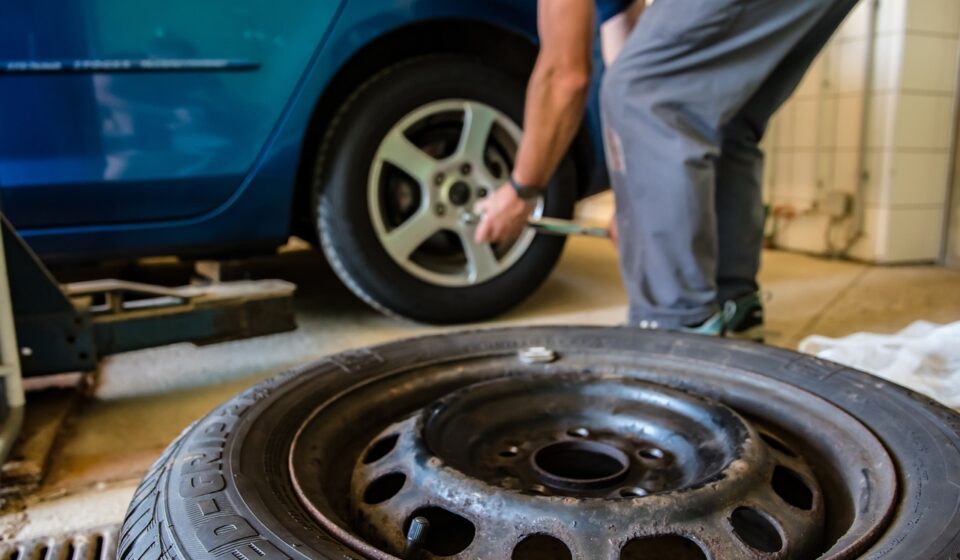
Tires are one of the most important safety items in any routine service. They affect braking, traction, steering response, ride stability, and fuel economy. The National Highway Traffic Safety Administration advises drivers to use the pressure listed on the vehicle placard or in the owner’s manual, not the maximum pressure printed on the tire sidewall. Tire pressure should be checked when the tires are cold, and tread should be inspected for depth, uneven wear, cuts, bulges, cracks, and embedded objects.
NHTSA identifies 2/32 of an inch as the point at which tires should be replaced for tread depth. That minimum should not be treated as a comfort target in wet or winter conditions. Uneven wear may point to underinflation, overinflation, worn suspension parts, poor alignment, or a need for rotation and balancing.
Brakes, steering, and suspension
A proper car maintenance service should take a road-safety view of the brake system, not just a quick pad measurement. The inspection should consider pad or shoe thickness, rotor or drum condition, brake fluid condition, leaks, parking brake operation, warning lights, pedal feel, vibration, pulling, and unusual noise. Steering and suspension checks should look for worn joints, damaged boots, loose components, leaking shocks or struts, and play that could affect control.
Lighting, visibility, and driver awareness
Small visibility items can become safety problems quickly. Headlights, brake lights, reverse lights, turn signals, hazard lights, license plate lights, wiper blades, washer fluid, mirrors, defrosters, and the horn should be checked regularly. Advanced driver assistance cameras and sensors also need clean surfaces and proper alignment after windshield, bumper, or body repairs.
Fluids, filters, belts, batteries, and other service items
Fluid and filter maintenance protects parts that are expensive to replace. The correct interval depends on the vehicle, fluid type, use pattern, and manufacturer specification. A reliable service provider should use the correct grade and specification, document the work, and avoid substituting fluids simply because they are convenient.
| Service area | What to check | Why it matters | Common trigger |
|---|---|---|---|
| Engine oil and filter | Level, condition, leaks, correct specification | Reduces friction, heat, sludge, and engine wear | Oil-life monitor, mileage, time, or severe service use |
| Coolant system | Coolant level, concentration, hoses, radiator, water pump area | Helps prevent overheating, freezing, and corrosion | Scheduled interval, leak, overheating, age, or contamination |
| Brake fluid | Fluid level, moisture condition, leaks, pedal feel | Supports braking performance and hydraulic reliability | Manufacturer interval, fluid test, or brake repair |
| Transmission or driveline fluids | Leaks, condition, service interval, correct fluid type | Protects gears, bearings, clutches, and driveline components | Manufacturer schedule, towing, hard use, or shifting concerns |
| Battery and charging system | Battery health, terminals, alternator output, cable condition | Reduces no-start risk and electrical faults | Age, slow cranking, warning light, corrosion, or seasonal change |
| Belts and hoses | Cracks, swelling, glazing, leaks, tension, routing | Prevents overheating, charging failure, and accessory loss | Visible wear, noise, age, or related repair |
Cabin and engine air filters are often simple service items, but they should still be judged by condition and schedule. A dirty cabin filter can reduce HVAC airflow and defogging performance. A restricted engine air filter can affect performance on some vehicles, especially in dusty operating conditions.
How to compare service recommendations and estimates
A good estimate separates inspection findings from recommended repairs. It should identify the part or system, the observed condition, the safety or reliability risk, the labor charge, the parts charge, taxes or fees, and whether the work is urgent, needed soon, or optional. Be cautious when a recommendation is vague, such as saying a system is bad without measurements, photos, diagnostic codes, or a plain-language explanation.
Ask whether the shop is recommending original equipment parts, aftermarket parts, remanufactured parts, or used parts. None of those categories is automatically right or wrong, but they can affect price, warranty coverage, fit, and durability. The estimate should also state whether diagnostic time is included or billed separately.
Warranty concerns are often misunderstood. The FTC explains that a manufacturer generally cannot require a consumer to use a particular brand of parts or a specific service provider to keep warranty coverage unless that item or service is provided for free or the company has a proper waiver. However, owners still need to follow required maintenance schedules and keep records. If a failure is caused by improper maintenance or an incorrect repair, warranty coverage can become more complicated. See also: Access Control.
Keep invoices, inspection sheets, fluid specifications, mileage, dates, and any photos or test results. These records help with warranty questions, resale value, recurring problems, and future troubleshooting.
Cost, frequency, and planning
Maintenance is easier to manage when it is treated as a normal ownership cost instead of an unexpected emergency. In September 2026, AAA reported that the average annual cost of owning and operating a new vehicle had risen to more than twelve thousand dollars, with maintenance, repair, and tires included as part of the ownership calculation. That figure is an average for new vehicles, not a quote for every driver, but it shows why routine service planning matters.
Frequency depends on mileage, time, driving conditions, climate, and vehicle design. A low-mileage vehicle may still need time-based service because fluids age, rubber parts harden, batteries degrade, and tires can age before the tread is gone. A high-mileage vehicle may need more frequent inspections because wear patterns become more important than the original service schedule alone.
A practical budget should include routine maintenance, tires, wear items, and a reserve for repairs. Delaying a small service can increase the chance of a larger repair, but replacing parts too early also wastes money. The goal is not maximum spending; it is informed timing.
A practical checklist for your next service visit
Before booking, gather the vehicle year, make, model, engine or trim, mileage, service history, warning lights, recent symptoms, and the exact wording of any dashboard message. Check whether there are open recalls, especially before a road trip or used-car purchase. Recall repairs are handled differently from ordinary maintenance, so they should not be treated as optional upsells.
- Bring the owner’s manual or know where the digital maintenance schedule is located.
- Describe symptoms clearly, including when they happen, speed, temperature, road condition, noise, smell, vibration, or warning light behavior.
- Ask the shop to rank findings as safety-critical, needed soon, monitor, or optional.
- Request old parts back when practical, especially for expensive repairs.
- Confirm fluid specifications before approving major fluid services.
- Review the invoice for mileage, date, parts, labor, warranty terms, and next recommended interval.
After the visit, take a short drive and recheck for warning lights, leaks, unusual sounds, pulling, vibration, or fluid smells. If something feels different in a concerning way, contact the shop promptly and document the issue.
Frequently asked questions
Is a car maintenance service the same as an oil change?
No. An oil change is one task within a maintenance program. A complete service visit should also consider tires, brakes, lights, fluids, filters, steering, suspension, battery condition, belts, hoses, visible leaks, recalls, and any warning lights or drivability concerns.
How often should I schedule routine maintenance?
Use the manufacturer’s schedule as the baseline, then adjust for severe service conditions, age, mileage, and inspection findings. Time-based maintenance can matter even when the vehicle is driven lightly, because fluids, batteries, rubber parts, and tires age.
Should I approve every service a shop recommends?
No. Ask what evidence supports the recommendation, whether it is required by the manufacturer, whether it is safety-related, and what happens if you wait. A trustworthy recommendation should include a clear reason, not just a general claim that the vehicle needs it.
Can I use an independent shop without losing warranty coverage?
In many cases, yes, as long as the required maintenance is performed correctly and documented. The FTC notes that consumers generally cannot be forced to use a specific service provider or brand of parts to keep warranty coverage unless the item or service is provided for free or a proper waiver applies.
What maintenance items are most important for safety?
Tires, brakes, steering, suspension, lights, wipers, visibility systems, and open safety recalls deserve priority. Fluids, belts, hoses, and the battery also affect safety because failures can lead to breakdowns, overheating, loss of power assistance, or reduced control.