How a laser security alarm fits into modern site security planning

a[data-rs-seo-link]{text-decoration:underline!important;color:#1a56db!important;cursor:pointer!important;}a[data-rs-seo-link]{text-decoration:underline!important;color:#1a56db!important;cursor:pointer!important;}
A laser security alarm is best understood as a precise beam-break sensor, not a complete security system on its own. It creates an invisible or visible line between a transmitter and receiver, then sends an alarm signal when that line is interrupted. In practical site security planning, that makes it useful for choke points, corridors, gates, loading areas, display cases and selected perimeter gaps where a clear line of sight can be maintained. The planning question is not whether a beam alarm is “stronger” than cameras, PIR sensors or access control. It is whether the sensor provides earlier, cleaner detection at a specific point, and whether staff, monitoring tools or video can verify and respond to the event.
What a laser security alarm actually does
The term “laser security alarm” is often used loosely. Some low-cost products use a true laser diode. Many commercial beam alarms use active infrared or photoelectric beams rather than a visible laser line. The operating principle is similar: one side sends light energy, the other side receives it, and an interruption beyond a set threshold triggers a relay, siren, panel input or notification.
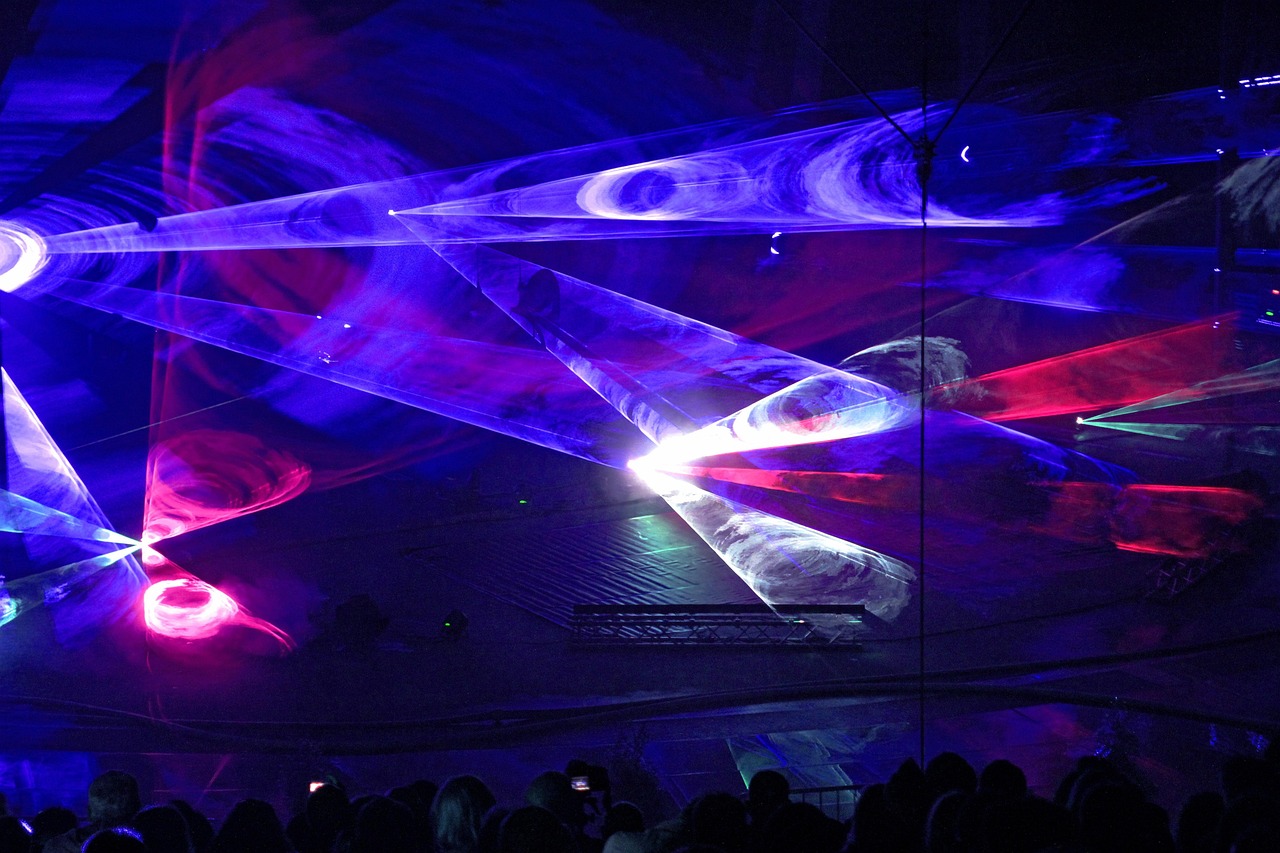
That makes a beam alarm a detection device. It does not identify a person, assess intent, delay entry or automatically create a useful record unless it is integrated with other systems. This distinction matters. A beam alarm can tell a site team that something crossed a defined line, but a camera, guard response, access log or alarm panel is usually needed to determine what happened next.
Security agencies commonly describe effective physical protection as layered rather than dependent on one technology. CISA’s security planning guidance, for example, emphasizes reviewing outer, middle and inner perimeters and using security-in-depth concepts. The Royal Canadian Mounted Police’s 2025 physical security guidance similarly treats electronic detection as part of defense in depth, not as a standalone substitute for barriers, procedures and response planning. (cisa.gov)
Where beam alarms make the most sense
A beam-based alarm is strongest where the protected path is narrow, predictable and visually unobstructed. It is weaker where people, animals, weather, equipment or vegetation regularly cross the same space.
Defined indoor paths
Indoors, a laser security alarm can work well across a hallway, restricted doorway, stockroom entrance, service corridor, stairwell landing or display area. Indoor conditions are easier to control because lighting, moisture, insects, wind and temperature swings are usually limited. The sensor can also be mounted at a height that matches the risk: low for crawl-through concerns, waist or chest height for normal pedestrian movement, or in multiple beams where higher confidence is needed.
Outdoor perimeter gaps
Outdoors, beam alarms are commonly considered for gate openings, fence breaks, alley entries, loading docks, roof access points and narrow approaches between buildings. The challenge is exposure. An outdoor beam must tolerate rain, fog, snow, dust, sunlight, vibration, birds, insects and landscaping changes. A device that performs well in a garage or hallway may not be suitable for an exposed perimeter unless it is designed for that environment.
Asset-level protection
Beam alarms can also protect a specific asset or display zone. Examples include a valuable equipment cage, a tool crib, a museum-style display case or a restricted bench in a lab. In these applications, the beam is not expected to cover the entire facility. It adds a local detection line around something that needs faster notice and response.
Safety and compliance checks before purchase
Safety should be checked before price, range or smart-home features. In the United States, the FDA regulates laser products under federal radiation performance standards, including 21 CFR 1040.10 and 1040.11. FDA consumer guidance also warns that some laser products sold online may not meet federal safety requirements and says compliant products should carry certification and identification labeling. (fda.gov)
OSHA laser safety guidance is also relevant to site planning because it warns that direct eye exposure to a laser beam should be avoided, even with low-power lasers. For a security layout, this means avoiding beam paths that point toward normal eye level, reflective surfaces, public sidewalks, vehicles, windows or areas where maintenance staff may unknowingly look into the source. (osha.gov)
For commercial alarm projects, product and installation standards may matter as much as the sensor concept. UL 639 addresses intrusion-detection units, and UL notes that devices covered by the standard are intended to be installed in accordance with UL 681 for burglar and holdup alarm systems. A site that requires insurance approval, central station monitoring, code compliance or a formal security assessment should confirm acceptable listings and installation practices before buying equipment. (shopulstandards.com)
The practical conclusion is straightforward: do not buy an unknown high-power “laser alarm” simply because it claims long range. Prefer equipment that clearly identifies its beam type, safety class, certifications, operating environment, power requirements and alarm output. When in doubt, use a qualified security installer rather than improvising with hobby laser modules.
Design choices that reduce false alarms
False alarms are often a design problem before they are a product problem. A reliable beam alarm can still become noisy if it is placed in the wrong location or exposed to routine activity.
- Control the line of sight. The beam needs a stable path between transmitter and receiver. Avoid moving signs, hanging cables, plants, flags, loose tarps and storage areas where boxes may be stacked into the beam.
- Choose the right mounting height. A low beam may detect crawling or vehicle tires but is more exposed to debris and small animals. A higher beam may reduce nuisance triggers but can miss low movement. Multiple beams can help when the risk justifies the complexity.
- Allow range margin. Do not choose a sensor whose maximum rated range barely matches the site distance. Outdoor weather and alignment drift can reduce practical performance.
- Protect against tampering. Look for covers, tamper switches, supervised wiring or panel supervision where the alarm is protecting a critical point.
- Pair alarms with assessment. A camera view, access log or guard patrol route should help confirm whether the trigger was a person, vehicle, animal or environmental event.
- Plan maintenance. Lenses need cleaning, mounts need inspection and vegetation needs trimming. Any beam alarm should be included in a recurring test schedule.
CISA’s industrial control system defense-in-depth guidance lists physical perimeter controls such as motion detection, cameras and security forces alongside other protective measures. That framing is useful beyond industrial sites: detection has value only when a response path exists. (cisa.gov)
How it compares with other security sensors
A laser security alarm is not automatically better or worse than other sensors. It is narrower. That narrowness can be a strength when the protected path is well defined, and a weakness when the threat path is uncertain.
| Technology | Strong use case | Main limitation | Good pairing |
|---|---|---|---|
| Laser or active beam alarm | Defined lines such as gates, corridors, display cases and perimeter gaps | Needs alignment and a clear beam path | Camera verification and alarm panel input |
| PIR motion sensor | Rooms, offices and indoor zones with expected human movement patterns | Can be affected by heat, airflow, pets or poor placement | Door contacts and video |
| Microwave or dual-technology motion sensor | Areas where a second detection method is needed to reduce false alarms | May require careful tuning to avoid detecting beyond the intended zone | PIR, access control and monitoring |
| Fence disturbance sensor | Fence lines where climbing, cutting or vibration should be detected | Fence condition and weather exposure affect performance | Perimeter cameras and lighting |
| Video analytics | Visual assessment and event classification over larger areas | Lighting, camera angle, bandwidth and analytics quality matter | Beam alarms, lighting and response procedures |
The practical takeaway is to use beam alarms where they create a clear detection advantage. If the site needs wide-area awareness, a camera or radar-style solution may cover more ground. If the site needs confirmation that a door opened, a contact sensor may be simpler. If the site needs a protected trip line across a driveway or restricted corridor, a beam alarm may be the cleaner choice. See also: Access Control.
A practical planning framework
Before installing a laser security alarm, map the site in layers. Start with the asset, then work outward. What needs protection? What route would a person or vehicle likely take? Where can detection happen early enough for a useful response? Where would an alarm create too many nuisance events?
- Define the protected asset. Examples include inventory, tools, records, equipment, a server room, a vehicle area or a restricted entrance.
- Map outer, middle and inner zones. This mirrors the layered approach used in formal security planning and helps avoid overloading one sensor with too many responsibilities.
- Select the detection line. Choose a beam location where legitimate movement is limited and unauthorized crossing is meaningful.
- Decide how the alarm will be assessed. A trigger should connect to video, a monitored alarm panel, a local siren, mobile notification or a written response procedure.
- Design for failure. Ask what happens if power is lost, the beam is blocked, the housing is opened or the network connection fails.
- Test in real conditions. Walk tests should include day and night conditions, normal operations, cleaning routines, deliveries, weather changes and expected traffic patterns.
This framework separates the beam alarm’s detection job from the site’s assessment and response jobs. A device can detect accurately and still fail the security plan if nobody can verify or act on the alert.
Buying checklist for a laser security alarm
When comparing products, focus on verifiable specifications rather than dramatic range claims. A useful buying checklist should include:
- Beam type, wavelength or whether the product is actually active infrared rather than a visible laser.
- Laser class, safety labeling and compliance information for the market where it will be used.
- Indoor or outdoor rating, temperature range and housing protection.
- Maximum rated range plus a practical margin for weather, dirt and alignment drift.
- Single-beam, dual-beam or multi-beam configuration.
- Alarm output type, such as relay contact, panel zone input, siren output or network integration.
- Power source, backup power and low-power reporting.
- Tamper detection and supervised wiring options.
- Mounting hardware, alignment tools and lens cleaning access.
- Compatibility with cameras, alarm panels, access control or monitoring services already on site.
For a small indoor use, a simple beam alarm may be sufficient if it is safe, labeled and placed responsibly. For a business perimeter, school, warehouse, utility site or high-value storage area, the purchase should be part of a documented design rather than a standalone gadget decision.
Common mistakes to avoid
The first mistake is treating a laser security alarm as invisible fencing for every possible path. Beam alarms are linear. If an intruder can step around, climb over or crawl under the line without entering the protected path, the device has not failed; the design has.
The second mistake is ignoring verification. Repeated unverified alerts can train staff to dismiss alarms. A camera view, response checklist or monitoring procedure turns a beam break into actionable information.
The third mistake is overlooking routine operations. Deliveries, cleaning crews, forklifts, pets, landscaping, seasonal decorations and maintenance work can all cross a beam. The best beam location is often not the most dramatic one. It is the one where an interruption reliably means something security-relevant.
Frequently asked questions
Is a laser security alarm safe?
It can be safe when the product is properly designed, labeled, installed and aimed. The key is to avoid direct eye exposure, reflective paths and unlabeled products with unclear power levels. FDA and OSHA materials both support a cautious approach to laser product selection and beam placement. (fda.gov)
Can a laser security alarm work outdoors?
Yes, but only if the device is designed for outdoor use and the layout accounts for weather, sunlight, insects, animals, vibration and alignment. Outdoor beam alarms should have more range margin and a stronger maintenance plan than indoor installations.
Is a laser alarm better than a motion sensor?
Not universally. A beam alarm is better for a defined crossing line. A motion sensor is often better for room or zone coverage. Many sites benefit from both because they answer different questions.
Can an intruder bypass a beam alarm?
Yes. Any single sensor can be bypassed if its coverage is understood and there are alternate routes. That is why beam alarms should be combined with physical barriers, lighting, cameras, access control, monitoring and response procedures.
Should a laser security alarm connect to a camera?
In most business and site-security settings, yes. A beam alarm provides the trigger, while the camera provides assessment. This combination helps determine whether the event was a person, vehicle, animal, wind-blown object or maintenance activity.
Bottom line
A laser security alarm is most valuable when it protects a specific line that matters. It can improve early detection at gates, corridors, asset zones and perimeter gaps, but it should not be sold or planned as a complete site security answer. The strongest design starts with the asset, maps the site in layers, chooses the right detection point, verifies safety and compliance, and connects the alarm to assessment and response. Used that way, a beam alarm becomes a practical part of modern site security planning rather than a standalone gadget.