Fire detection and alarm system basics for safer building response
a[data-rs-seo-link]{text-decoration:underline!important;color:#1a56db!important;cursor:pointer!important;}a[data-rs-seo-link]{text-decoration:underline!important;color:#1a56db!important;cursor:pointer!important;}
Why fire detection and alarm system design still matters
A fire detection and alarm system has three core jobs: detect a developing fire, alert the people who need to act, and send the correct signal to response teams or connected building systems. In practice, that performance depends on detector selection, device placement, power, circuit supervision, notification design, monitoring, maintenance, and the way occupants and staff respond. NFPA’s Fire Loss in the United States During 2024 report estimated about 1.38 million fires and 3,920 civilian fire deaths in the U.S., while the U.S. Fire Administration estimated 344,600 residential building fires in 2023. Those figures underline a practical point for building teams: detection is not just a compliance item. It is a time-management system for life safety.
Owners, facility teams, and safety managers should treat alarms as part of an integrated safety process, not as stand-alone devices. A detector that activates too late, a notification appliance that cannot be perceived, or a neglected battery can weaken the entire response chain. For more coverage of related technologies and safety updates, visit the Alarm and Detection section.
What a fire detection and alarm system includes
In industry use, a fire detection and alarm system usually refers to a supervised network of initiating devices, a fire alarm control unit, notification appliances, power supplies, communication pathways, and, where required, interfaces to suppression, elevators, doors, smoke control, or building management systems. The final configuration depends on occupancy, locally adopted codes, authority having jurisdiction requirements, insurance expectations, and the building’s risk profile.
| System element | Typical role | Why it matters |
|---|---|---|
| Initiating devices | Smoke detectors, heat detectors, flame detectors, manual pull stations, waterflow switches, and other inputs | They identify a fire condition or manual alarm request and start the response sequence. |
| Fire alarm control unit | Receives signals, supervises circuits, displays status, and controls outputs | It acts as the decision and communication hub of the system. |
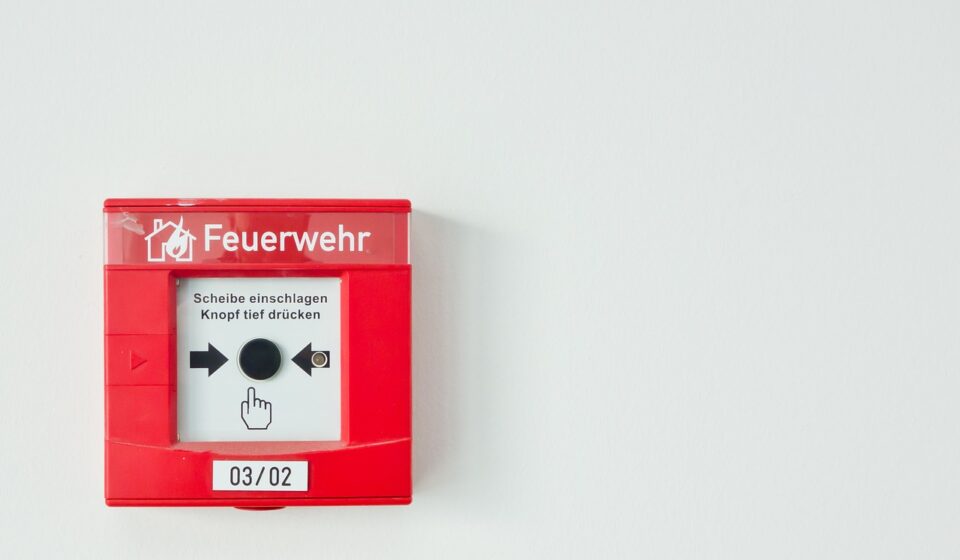
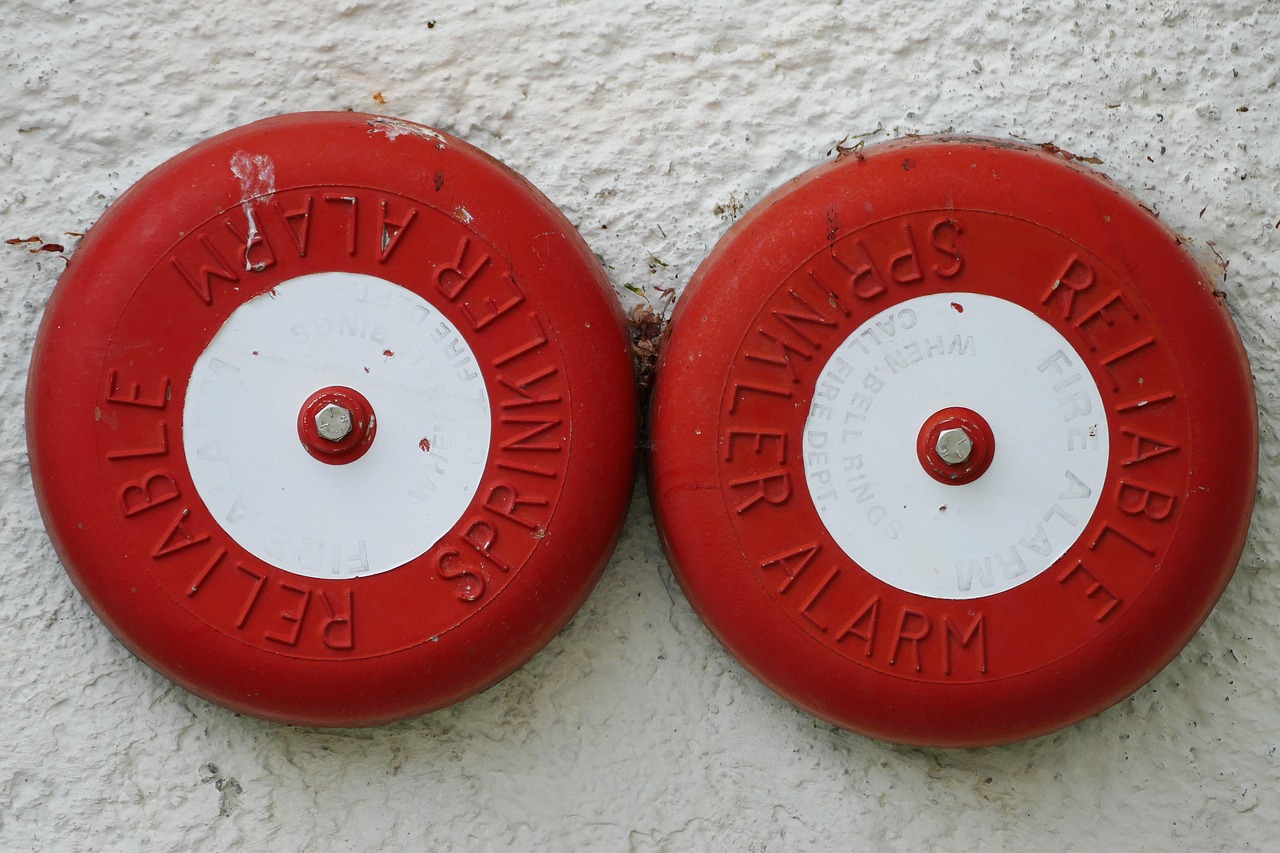
| Notification appliances | Horns, strobes, speakers, chimes, voice messages, or tactile notification where needed | They must be understandable and perceivable by occupants in the affected areas. |
| Power and pathways | Primary power, secondary power, circuits, network links, and supervision | Reliability depends on continuity, backup capacity, fault reporting, and survivability where required. |
| Monitoring and reporting | Supervising station, local annunciation, or other approved reporting path | It helps move the alarm from the building to emergency response or responsible personnel. |
| Emergency control interfaces | Fan shutdown, smoke control, door release, elevator recall, suppression release, or access-control coordination | They connect detection to broader building safety functions, but they must be carefully designed and tested. |
One common mistake is focusing only on detector type. Detection matters, but the alarm sequence matters just as much. What happens when a detector operates? Does the system trigger evacuation, investigation, supervisory notification, suppression release, or a staged voice message? Those answers should be documented before equipment is installed.
How detection technologies differ
Different fire signatures call for different detection strategies. Smoke, heat, flame, combustion gases, air movement, ceiling height, airflow, dust, humidity, and normal operations can all affect response. The best choice is not always the most sensitive device; it is the device that can detect the intended hazard reliably without creating avoidable nuisance alarms.
Smoke detection
Smoke detection is widely used because many fires produce airborne particles before they generate extreme heat. NIST explains that ionization alarms tend to respond more quickly to some flaming fires, while photoelectric technology is often more responsive to larger particles associated with smoldering fires. Modern devices may use photoelectric, multi-criteria, or other sensing approaches, especially in commercial systems where the operating environment and alarm management are important design factors.
Smoke alarms used in households and smoke detectors connected to fire alarm systems are not the same product category. UL 217 applies to smoke alarms, while UL 268 applies to smoke detectors for fire alarm systems. The updated UL 217 requirements that became effective for tested devices in 2024 added attention to modern fire scenarios and cooking-related nuisance alarm reduction. At the same time, NIST testing has shown that nuisance alarms during cooking remain a real issue. Placement, ventilation, maintenance, and user education still matter.
Heat, flame, and special hazard detection
Heat detectors are often used where smoke detectors would be unsuitable, such as dusty, humid, or process-heavy areas. They may respond to a fixed temperature, a rate of temperature rise, or both. They are generally less prone to nuisance alarms caused by smoke-like particles, but in many scenarios they may respond later than smoke detection.
Flame detectors, including ultraviolet and infrared technologies, are used in special hazard environments where open flame must be identified quickly, such as fuel handling, industrial processing, aircraft hangars, or certain energy facilities. Aspirating smoke detection can provide very early warning by drawing air through sampling pipes, which can be useful in data centers, archives, clean rooms, or high-value spaces. Duct detectors, beam detectors, carbon monoxide detection, and gas detection may also be part of a broader life safety or process safety strategy, but each has specific design limits.
Standards and responsibilities that shape system design
In the United States, NFPA 72, National Fire Alarm and Signaling Code, is the central technical reference for fire alarm and signaling system installation, performance, testing, inspection, and documentation. The 2025 edition includes organized chapters covering fundamentals, circuits and pathways, inspection and testing, initiating devices, protected premises systems, emergency communications, supervising station systems, household signaling, and cybersecurity. Local codes may adopt a specific edition, so the enforceable edition is not always the newest published edition.
OSHA rules also affect workplace systems in specific situations. OSHA 29 CFR 1910.164 addresses automatic fire detection systems installed to meet an OSHA standard. It requires approved equipment, restoration to normal operation after testing or activation, qualified servicing and maintenance, and detector spacing based on design data, manufacturer recommendations, engineering surveys, tests, or recognized laboratory listings. OSHA also states that detector-actuated alarms generally may not be delayed more than 30 seconds unless the delay is necessary for employee safety and is addressed in an emergency action plan.
OSHA 29 CFR 1910.165 covers employee alarm systems used to provide warning for emergency action or safe escape. It emphasizes that alarms must be distinctive and recognizable, capable of being perceived above ambient noise or light levels, maintained in operating condition, and serviced or tested by trained personnel. In practical terms, compliance is not only an installation issue. It also involves training, maintenance, documentation, and emergency planning.
Because codes vary by occupancy and jurisdiction, final design decisions should be made by qualified fire protection professionals and reviewed with the authority having jurisdiction. An article can explain the framework, but it cannot replace code analysis for a specific building.
Design choices that affect real-world performance
Several decisions have an outsized effect on whether a fire detection and alarm system performs as intended during an emergency. See also: Access Control.
- Addressable versus conventional architecture: Addressable systems can identify the specific device or point in alarm, which helps response teams locate the event faster. Conventional systems identify zones rather than individual points and may still be appropriate for smaller or simpler facilities.
- Clear zoning and labeling: Device descriptions should use names that responders and facility staff understand. A vague label such as “Zone 3” is less useful than a location tied to a floor, room, riser, or equipment area.
- Notification strategy: Audible, visible, and voice notification must match the occupancy. A warehouse, hotel, school, healthcare area, and office tower may require different alarm patterns, message sequencing, and accessibility considerations.
- Alarm verification and investigation features: Some systems use programmed sequences to reduce unwanted dispatches. These features must be allowed by code and carefully documented so they do not improperly delay life safety response.
- Monitoring path: A local alarm may warn occupants, but supervising station monitoring can help notify emergency response or responsible parties when no one is watching the panel.
- Interface control: Door release, HVAC shutdown, elevator recall, smoke control, and suppression release should be coordinated. Poor interface testing is a common source of hidden failure.
- Cybersecurity and network management: As fire alarm systems use more networked components and remote services, access control, software management, and documentation become part of safety reliability.
The design goal is not to add complexity for its own sake. It is to match the system to the building’s hazards, occupancy behavior, maintenance capability, and emergency response plan.
Maintenance is where many systems succeed or fail
Installation is only the starting point. NFPA’s June 2024 Smoke Alarms in U.S. Home Fires report, based on 2018-2022 data, found that smoke alarms were present in 74 percent of reported home fires, yet nearly three out of five home fire deaths involved properties with no smoke alarms or alarms that failed to operate. The same report found that the death rate per 1,000 reported home fires was roughly 60 percent lower when alarms operated compared with fires where no alarms were present or none operated. Although those findings focus on homes, the operating lesson applies more broadly: a system that is present but not functional cannot deliver its intended benefit.
Maintenance should include scheduled inspection, functional testing, cleaning where required, battery and power checks, communication path testing, software or configuration control, and prompt correction of troubles or impairments. Facility teams should also maintain accurate records of device locations, test results, impairments, service actions, and changes after renovations.
Nuisance alarms need direct attention. They can result from cooking aerosols, steam, dust, insects, aerosol sprays, construction debris, poor placement, or environmental changes. Repeated nuisance alarms can lead occupants to ignore alarms or disable devices. The better response is to investigate the cause, clean or replace affected devices, adjust location where permitted, review device type, and train occupants on correct response. Silencing an alarm without understanding the cause should never become normal practice.
A practical planning checklist
Before specifying, upgrading, or reviewing a fire detection and alarm system, stakeholders can use the following checklist to frame discussions with designers, contractors, code officials, and maintenance teams.
- Define the occupancy, hazard areas, evacuation approach, and emergency action plan.
- Confirm the locally adopted codes, NFPA 72 edition, building code requirements, and authority having jurisdiction expectations.
- Identify where automatic detection is required, where manual initiation is needed, and where detection may be unsuitable without special design.
- Match detector technology to the fire signature and normal environment of each space.
- Plan notification for audibility, visibility, intelligibility, accessibility, and occupant behavior.
- Document alarm sequences, supervisory signals, trouble signals, monitoring paths, and emergency control functions.
- Verify primary and secondary power requirements, pathway supervision, and survivability where required.
- Coordinate interfaces with suppression, elevators, smoke control, HVAC, access control, and security systems.
- Create a maintenance and testing plan before turnover, not after the first trouble signal.
- Train occupants and responsible staff so they know what each alarm or message means.
This planning approach moves the discussion from equipment lists to performance. For a life safety system, the key question is not only whether devices are installed. It is whether the right people receive the right warning with enough time to act.
Frequently asked questions
What is the difference between fire detection and fire alarm?
Fire detection identifies a possible fire condition through devices such as smoke, heat, flame, waterflow, or manual initiating devices. Fire alarm refers to the broader process of processing that signal, notifying occupants or staff, reporting to a supervising station where used, and activating connected emergency functions.
Is a smoke alarm the same as a fire alarm system detector?
No. A household smoke alarm is typically a self-contained device with its own sounder and power arrangement. A smoke detector in a building fire alarm system is usually connected to a control unit and depends on the system for processing, supervision, and notification. Different UL standards apply to these categories.
How often should a fire detection and alarm system be tested?
The answer depends on the applicable code, device type, occupancy, manufacturer instructions, and local authority requirements. NFPA 72 provides detailed inspection, testing, and maintenance schedules, while OSHA rules require trained personnel for workplace systems covered by its standards. Building owners should keep written records and correct impairments promptly.
Can nuisance alarms be eliminated completely?
Probably not in every environment. Newer standards and improved sensing technologies are designed to reduce unwanted alarms, but cooking aerosols, steam, dust, poor placement, and maintenance issues can still cause problems. The practical goal is to reduce nuisance alarms without making the system less responsive to real fires.
Who should design a fire detection and alarm system?
Design should be handled by qualified professionals familiar with fire alarm codes, building conditions, device listings, occupancy requirements, and local authority expectations. For regulated buildings, the final design and installation should be reviewed, permitted, tested, and accepted through the required local process.